







HR Assessments to hire right fit candidates,
develop leaders,
and retain your teams.
Whether you're looking for workshops, behind-the-scenes administration, or do-it-yourself solutions, we make assessments simple and cost effective for you.

Hire, Promote, and Develop Smarter
You use data to make decisions in every aspect of your organization. You should use data to make people decisions as well.
Science-backed assessments used for onboarding, training, and team building increase employee retention, speed up leadership development, create stronger teams, and transform your workplace culture, creating a positive return on investment in every area of your business. Afterall, better people decisions create better business results.
FREE DOWNLOAD:
Assessments Made Easy
I'm Amy and I've made it my mission to take the guesswork out of assessment selection, implementation, and administration. This guide is a great place to start. You'll get instant access to:
10 questions to consider while choosing assessments for your organization
Comparisons of features and certification options
Pricing of certification programs and profiles
Suggestions to make your assessment program a success
Lots of ideas. Lots of solutions. Lots of support.
Pre-Employment Assessments for Hiring
Click the images below to achieve your goals.

Assessment
Solutions
Explore our assessments for candidate screening, development, team building, succession planning, and more.

Fabulous
Together
Give the women in your organization the coaching, confidence, and connections they need to have successful careers and a fabulous lives.

e-Learning
Made Easy
Create an amazing learning experience
whether your team is
at the office, at home, or on the go.

Lead
Ignited
Be the best leader you can be
with this award-winning
learning opportunity.
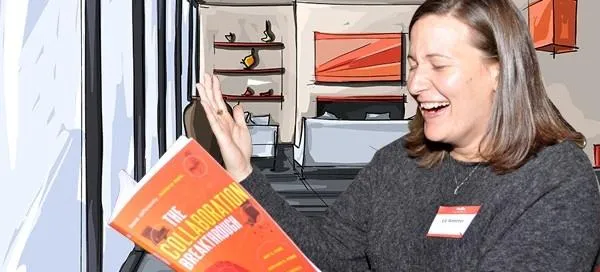
Collaboration
Breakthrough
Create a workplace you love with our best-selling book, employee survey, and interactive team experience.

Coaching
Conversations
Replace your archaic review process
with an online system to
guide GREAT conversations.
Download the Best Interview Questions
for Virtual Job Candidates
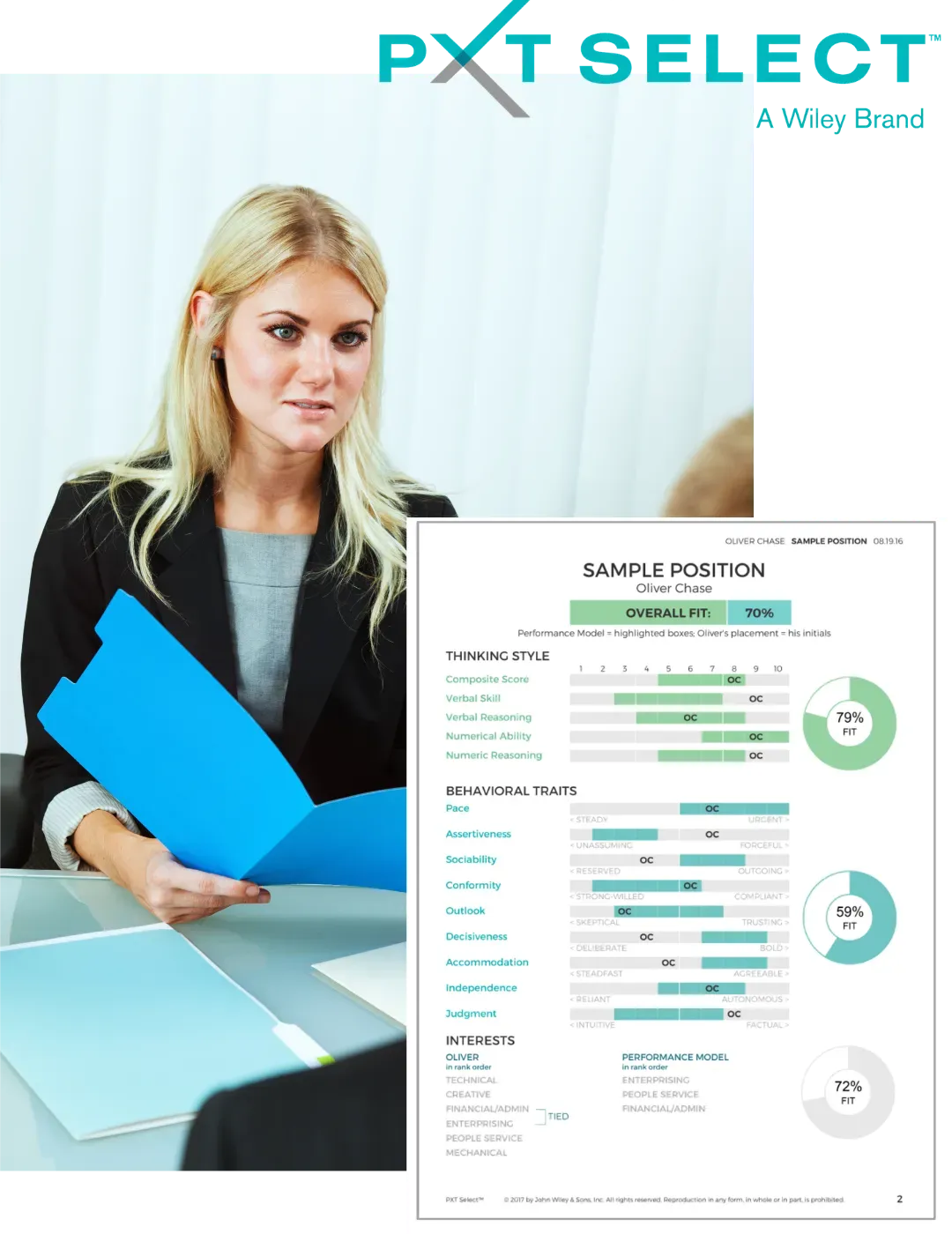
PXT Select
Reduce hiring mistakes by finding the right candidates faster with the most comprehensive candidate screening assessment on the market today. PXT Select measures thinking skills, behavioral traits, and motivational interests in one 45-minute assessment.
Perfect for HR professionals who need to:
Screen candidates faster and reduce time-to-hire with data-driven decisions
Get recommended interview questions based on candidates' fit
Give managers coaching tips to manager so new hires start strong
Identify succession candidates and support career pathways
Improve retention by hiring for cultural fit
15 free supplemental reports support job profiling, onboarding, coaching, leadership development, teambuilding, succession planning, and more.
EEOC Compliant |Valid & Reliable |30+ Years of Research
Behavioral Assessments for Leaders and Teams
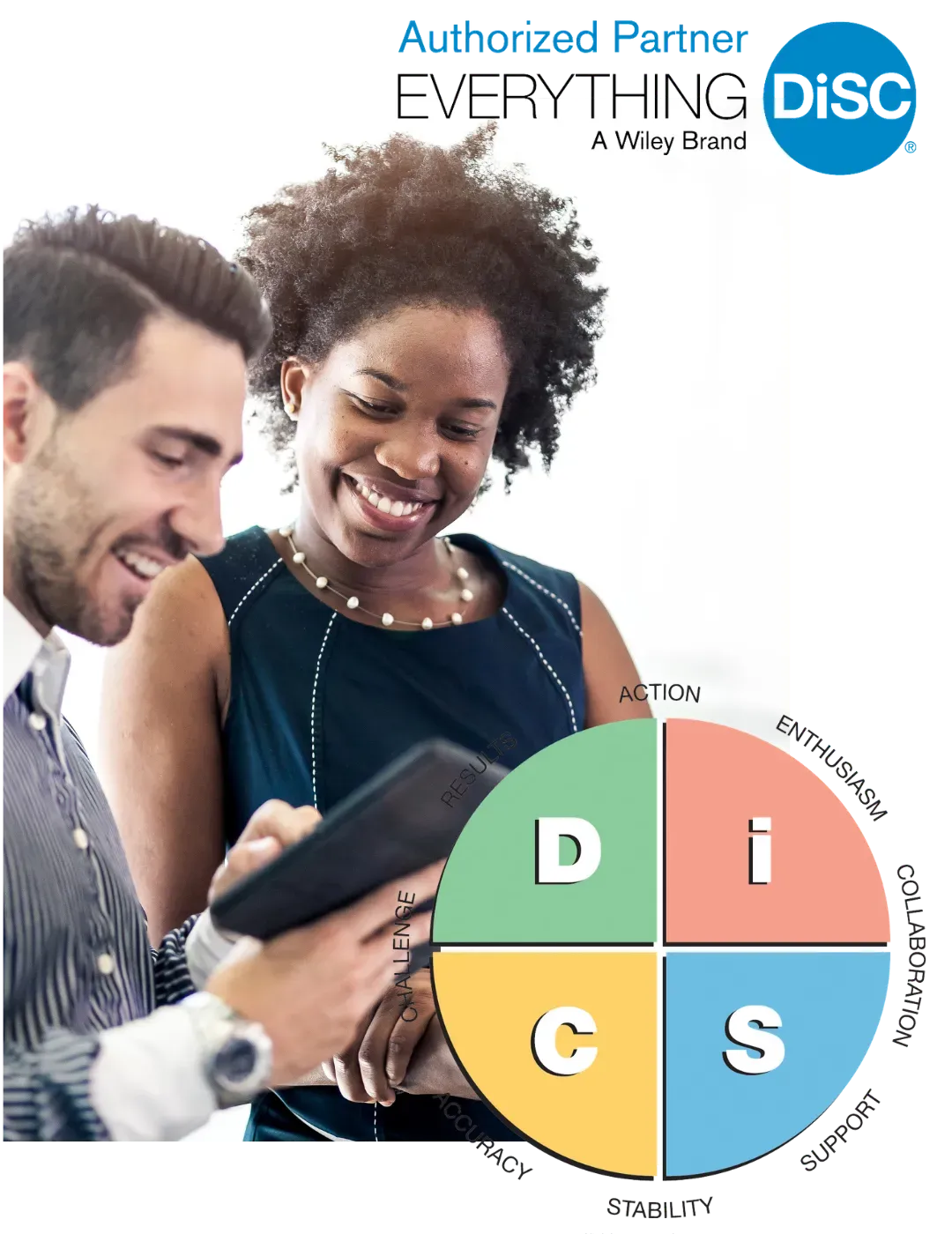
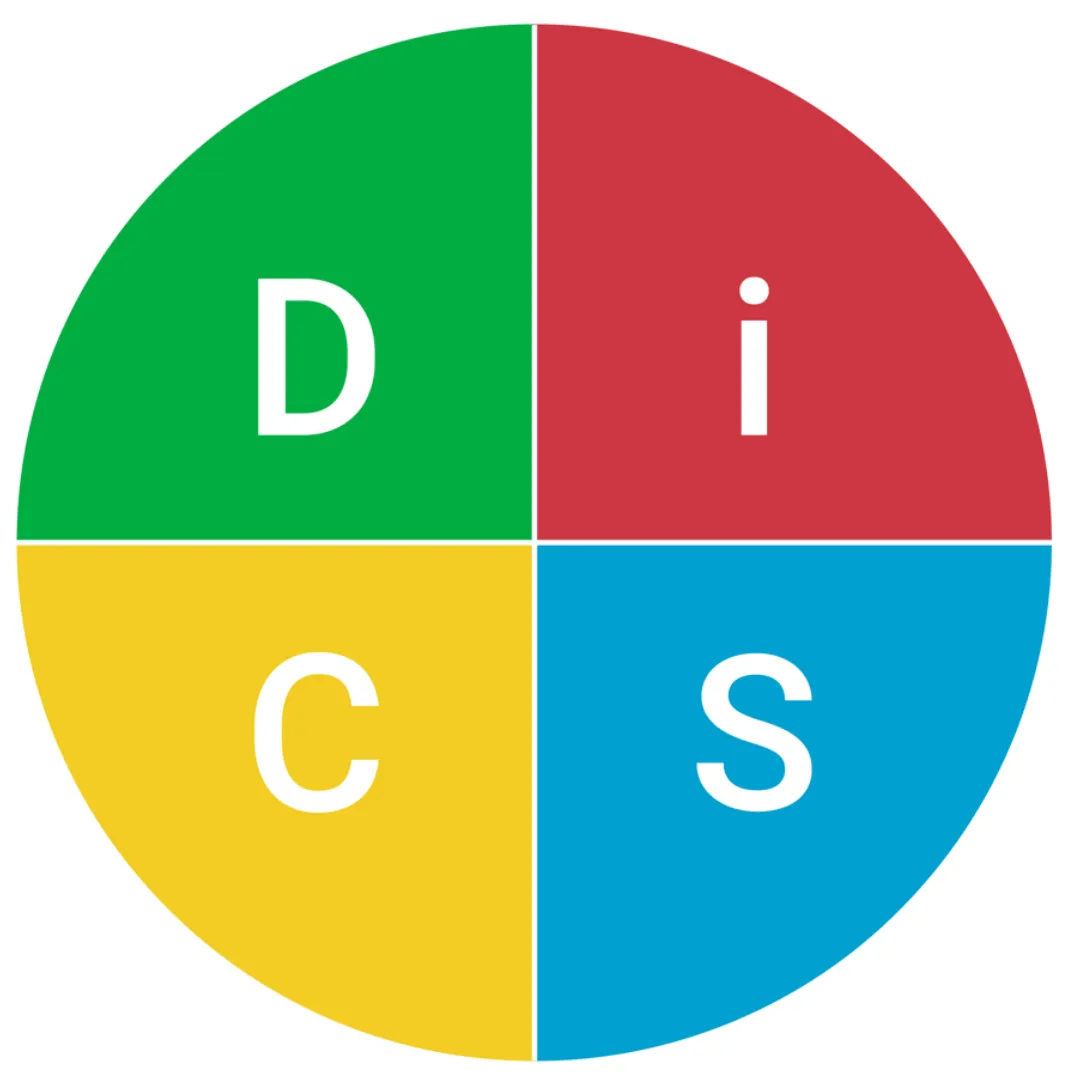
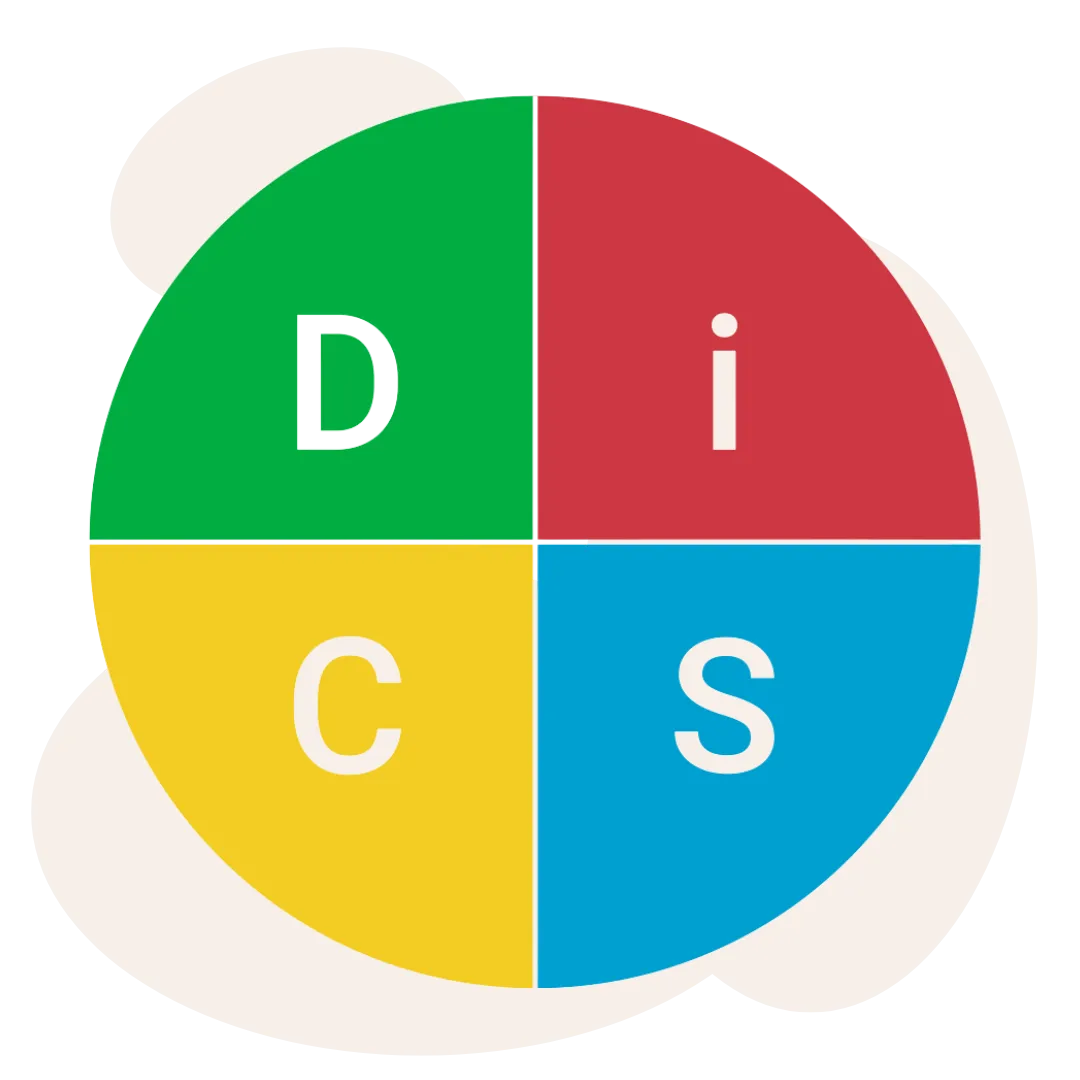
Everything DiSC
Build better communication, stronger teams, and effective leaders with Everything DiSC, the world's leading behavioral assessment used by 10+ million learners in 150,000+ organizations.
Ideal for Learning and Development professionals who need to:
Improve team communication and reduce conflict
Develop leaders at all levels
Facilitate dynamic teambuilding workshops that strengthen relationships and team effectiveness
Coach individuals to build agility and emotional intelligence
Expand their toolkit of customizable facilitator resources
Create a common language for workplace interactions
Plus, the Catalyst Platform gives learners ongoing access to dozens of micro-learning modules, the ability to create comparison and group reports with their colleagues, and to get personalized tips for effectiveness.
90% accuracy rating from learners | 40+ years of research |
Mobile-friendly for remote teams
Get Objective and Thoughtful Feedback
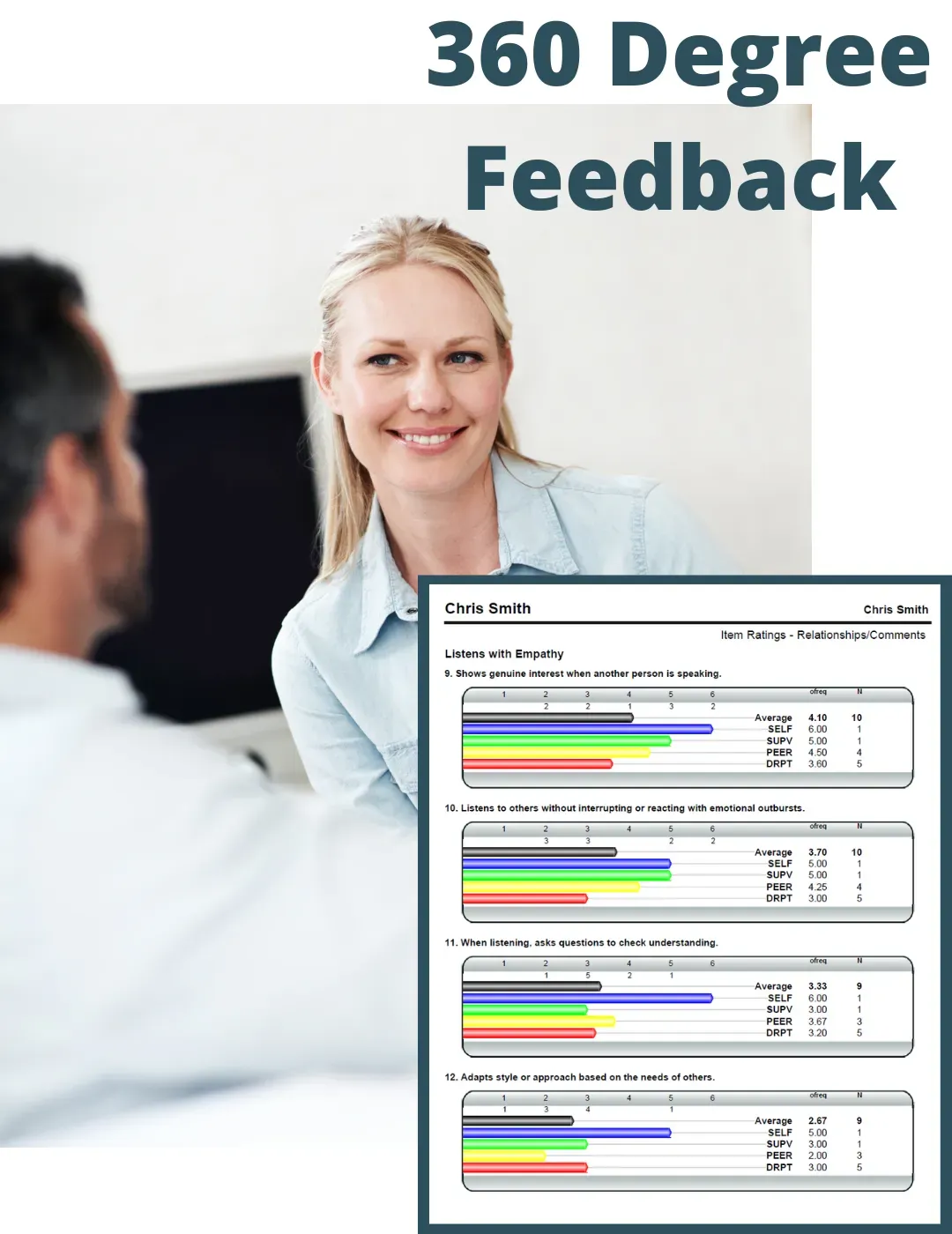
Customizable 360's
Accelerate leadership development with comprehensive feedback from managers, peers, direct reports, and others. Our customizable 360 degree feedback assessment is branded for your organization and provide actionable insights for leadership growth.
Perfect for learning and coaching professionals who need to:
Develop high potential employees
Build leaders' self-awareness of their strengths and blindspots
Add a new twist to performance review processes
Populate nine-block or other people planning templates
Measure leadership competency development over time
Your 360 will be designed to reflect your values, leadership competencies, and cultural norms. Plus, we'll develop an actionable Learn and Grow Guide to give participants' recommendations and progress tracking tools to build accountability for change.
Fully Customizable | One-on-One Debrief Services Available
Build High Performing and Collaboratie Teams
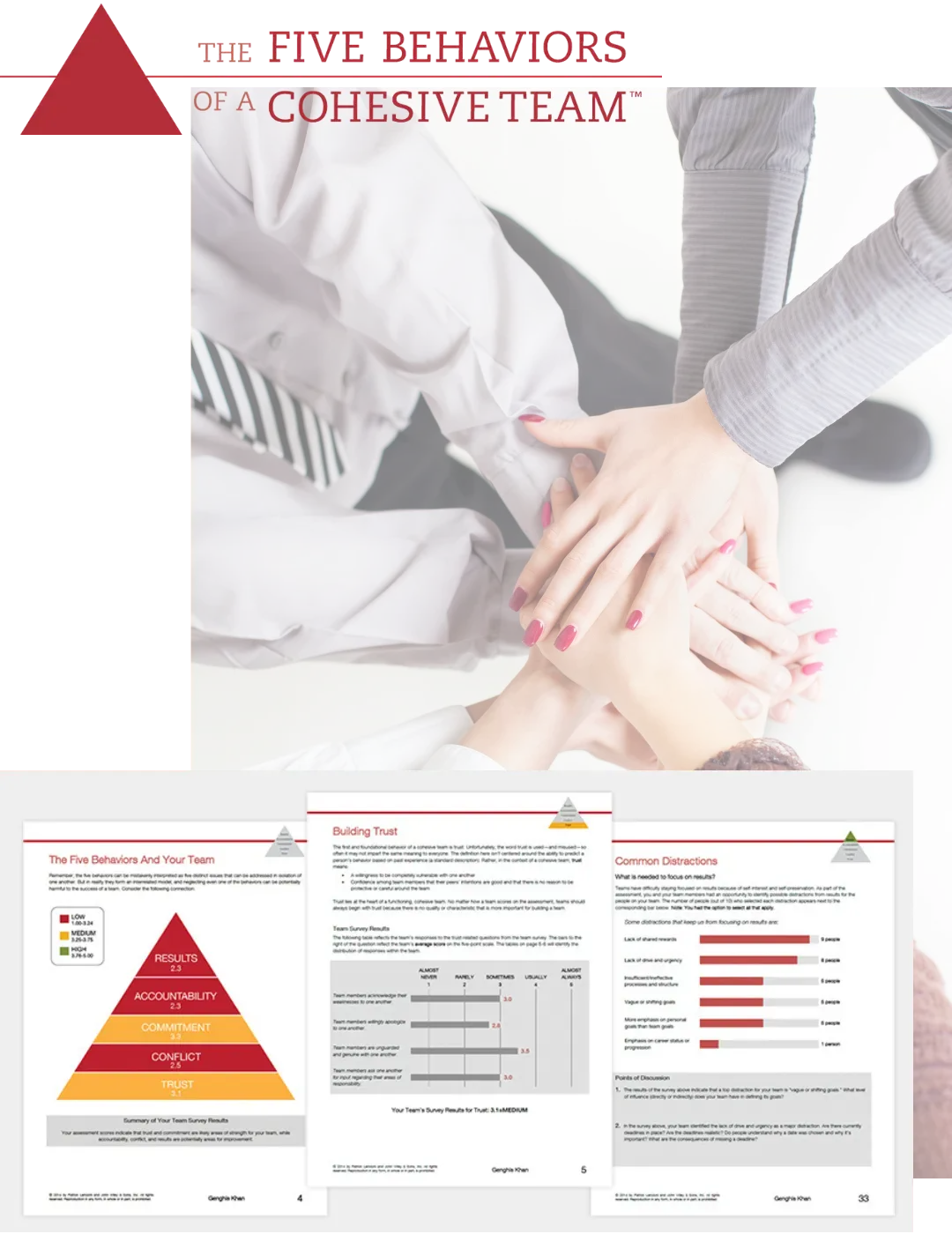
The Five Behaviors
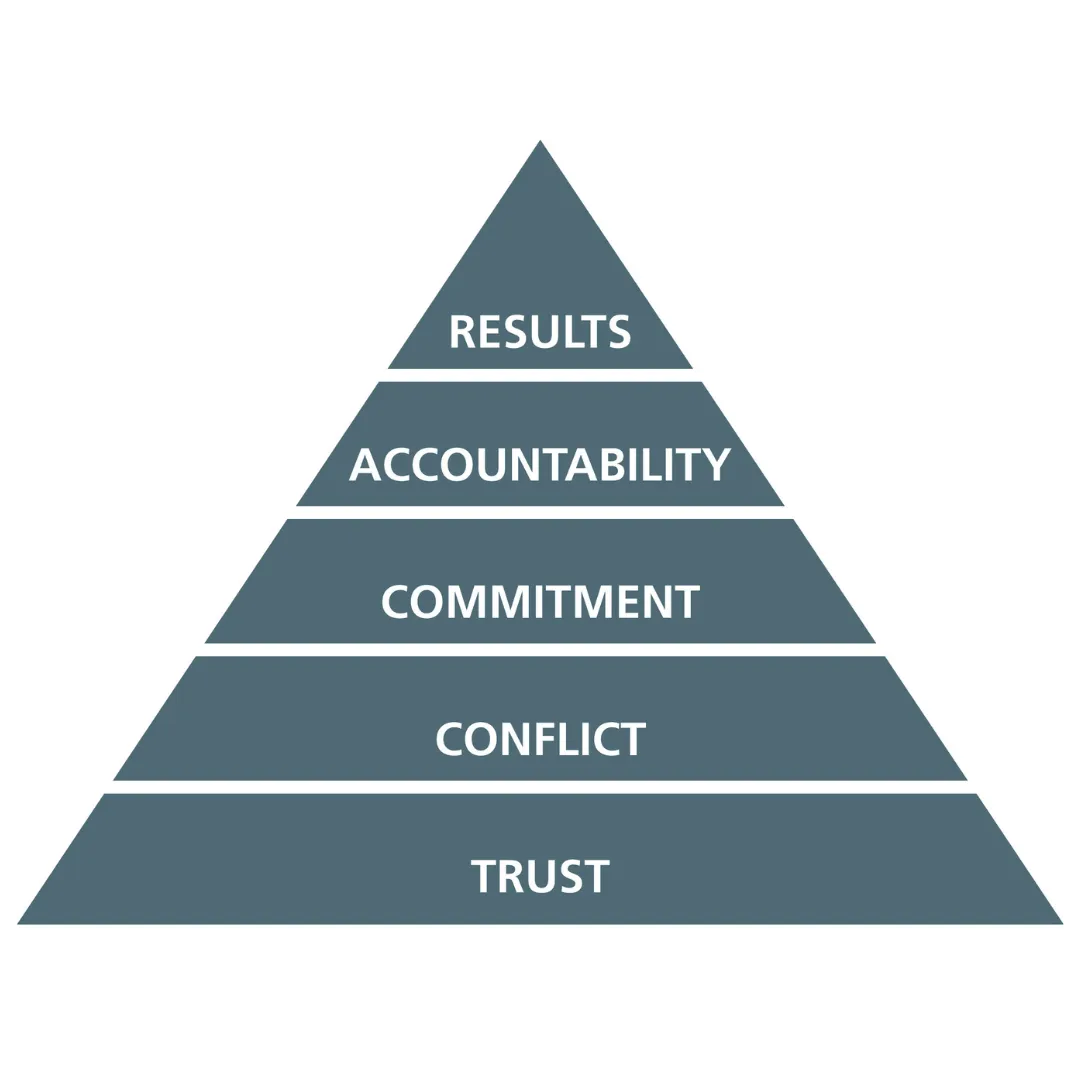
Transform your team with Patrick Lencioni's proven framework for building trust, healthy conflict, commitment, peer-to-peer accountability, and a spirit of shared results. Based on the best selling book, The Five Dysfunctions of a Team.
Perfect for facilitators who need to:
Diagnose team dysfunction in a non-threatening way
Facilitate thought-provoking team building experiences with leader at all levels or functional teams
Improve collaboration among project teams
Build trust in newly formed or cross-functional teams
The optional integration of Everything DiSC allows team members to understand how their styles contribute to or hinder teamwork. Plus, an annotated facilitator's report gives you a page-by-page script of how to lead the team to success.
Looking for Do-It-Yourself Solutions?
Build the capacity, credibility, and confidence of your learning and development team by getting certified. We give you the training and tools you need to make the impact you desire at a cost you can afford.

Be inspired.
Take a deep dive into the research and profiles while joining a network of assessment lovers like you.
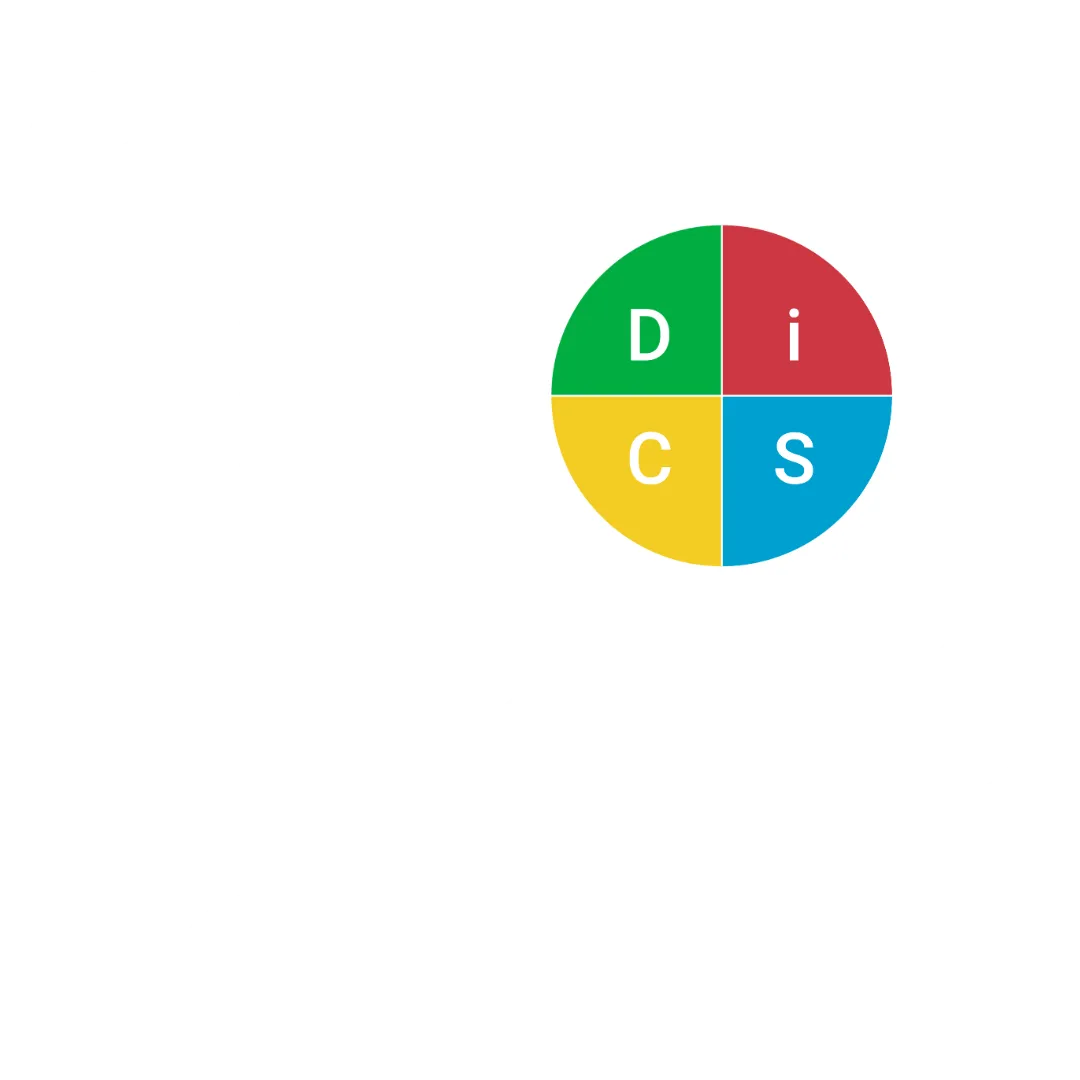
Expand your toolkit.
Get full facilitator kits with scripts, customizable PowerPoints, videos and online dashboards.

Build your expertise.
Earn continuing education credentia, while boosting your credibility and
your confidence.

Serve your team.
Make an impact on your organization. In fact, you could be the reason that people love their jobs again.
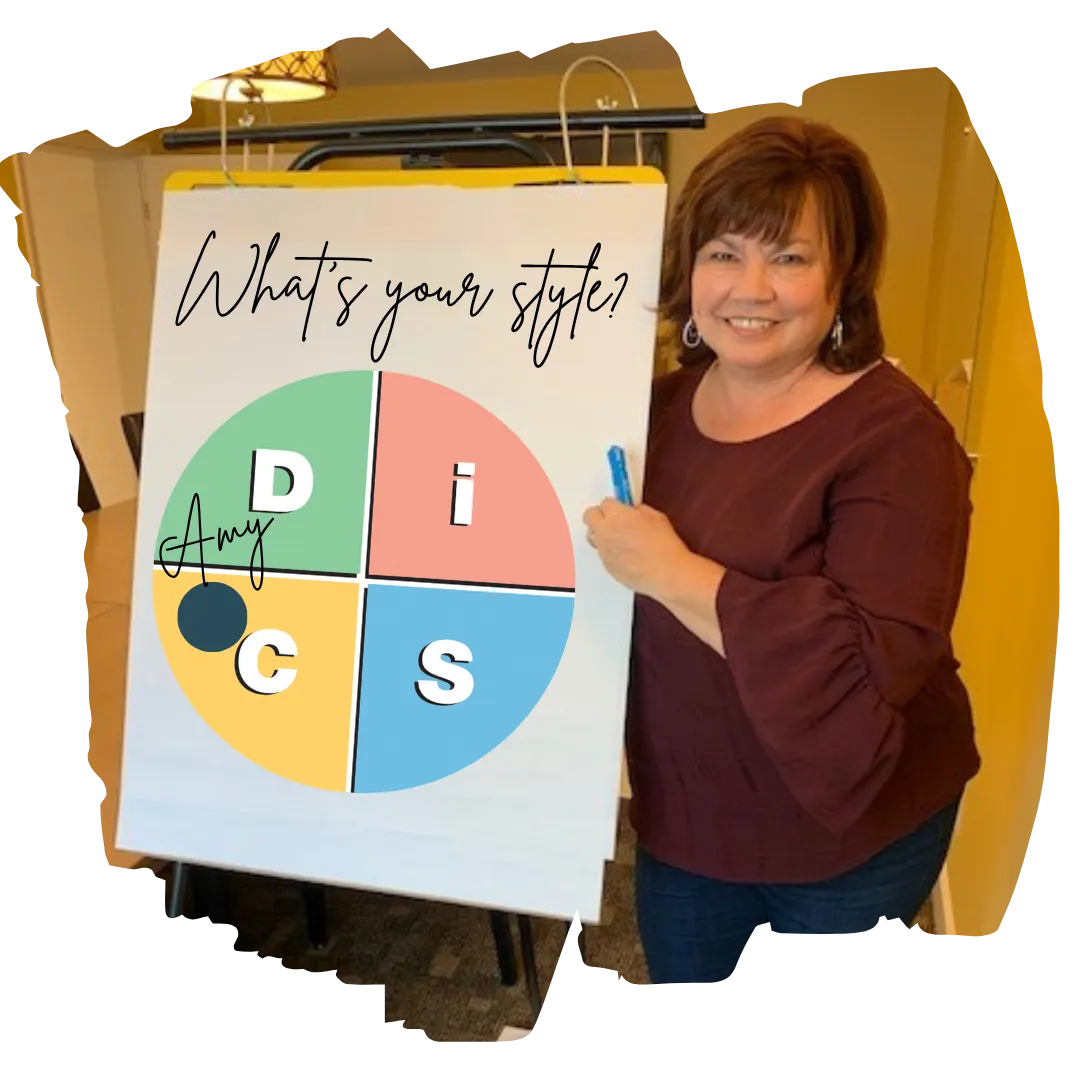
Hi there! I'm Amy Pearl.
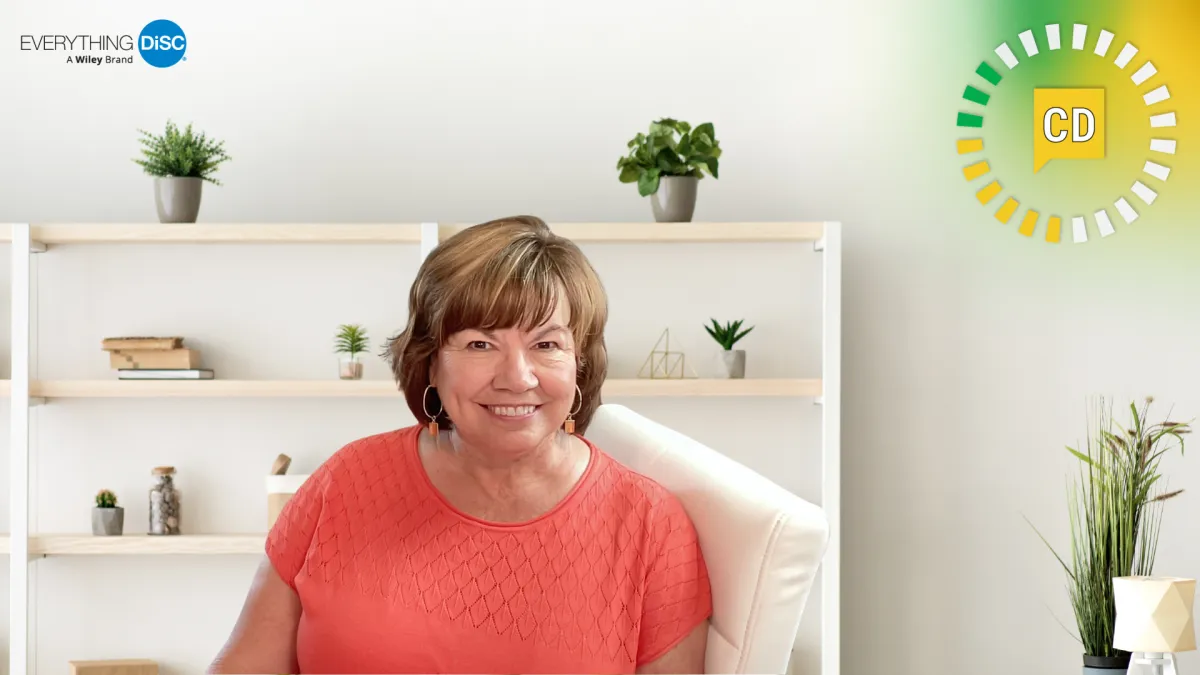
I'm so glad that you're exploring our assessment solutions. For three decades, I've used assessments in just about every imaginable application: candidate screening, leadership development, team building, training, succession planning, organizational analytics...the list goes on.
But, what I love best is working with Human Resources and L&D professionals who want to build their knowledge, toolkit, and confidence in using assessments. So, let's hop on a call to talk about your needs. No pushy sales conversations and no BS. 😉
You can see that in DiSC in am Conscientious and Dominant. So, we'll talk about your goals, weigh the pros and cons of various options, identify the best assessment for you.
I welcome the opportunity to help you thrive!
Look who's using our assessments today:



How to Get Results with Assessments:
Choose an assessment that's backed by science and research, but incredibly easy to implement.
Use the results throughout the employee experience, from candidate screening to learning to team development to career growth.
Drive performance, retention, engagement, change, and more outcomes by transforming your culture.
And don't worry. We are here to support you every step of the way!
Check out our recent news and blog.

How do I use DiSC with a team that's already done it before?
Quick Answer:
If your team has "done DiSC before," you haven't finished. You've barely started. DiSC isn't a one-time event. It's a framework for how people communicate, collaborate, and lead every day. In this post, you'll hear the story of a VP of Sales who thought he knew his team's styles and was dead wrong. Then, I'll share practical checklists for revitalizing DiSC with your managers, your teams, and your executives using tools you likely already have access to but aren't fully using.
"Oh Yeah, We Did DiSC Before."
Few things make me cringe more than hearing someone say those words. Like DiSC is something you check off a list. A single event. A workshop you attended that one time.
Sure, it was fun. You learned something about yourself. You probably pinky-promised to do something differently. And then your profile ended up in a drawer, under the seat of your car, or buried in a folder on your desktop that you haven't opened since.
Here's the truth: DiSC isn't something you do once. It's something you keep doing, every day, just like brushing your teeth, checking your email, and performing the tasks associated with your job. In fact, it might be one of the most important things you can do every day, since most days you interact with people. Reflecting on how you come across in situations, thinking about how you want people to feel when they interact with you, and adjusting your approach to build relationships, keep conflict healthy, and gain influence should be the norm, not a one-and-done event.
The organizations that get the most from DiSC aren't the ones that ran the best workshop. They're the ones that wove it into how they operate. And the good news is, if your team has already been through DiSC, you have a foundation to build on and the biggest expense behind you. You just need to know where to take it next.
The Story of Dave and 125 Sales People
Let me tell you about Dave. Dave was a VP of Sales and everything a sales leader often is: smart, driven, bold, confident, and let's just say he had no shortage of opinions. Dave had done DiSC before and learned a lot about himself. So when he wanted to share the experience with his team of 125 sales representatives, he came to me with a clear vision.
Dave knew DiSC well, and he was confident that being in sales, most of his team members would be high in Influence. He wanted me to make sure the workshop was super interactive and full of energy. I agreed, on one condition.
You see, it's very tempting to assume someone's DiSC style based on their job. Are there some trends? Absolutely. Sales often requires a lot of Influence. Accounting tends to attract Conscientiousness. Nursing often draws Steadiness. You'd like to think that people choose careers that align with their natural behavioral patterns. But in any functional area, you will see a mix of styles. Assuming otherwise is one of the fastest ways to get it wrong.
So I supported Dave's vision (you have to give people what they want before you can tell them what they need) on one condition: that we meet before the workshop to review the Group Culture Report and the team's composite profile.
A few weeks later, I hopped on a phone call with Dave and his HR manager. After a few quick pleasantries, I suggested that Dave turn to page 3 of the report to see the group's profile.
69% of the team were high in Conscientiousness! Completely opposite of what Dave had assumed.
Dead silence.
I thought I lost the connection. "Dave? Dave? Are you there?"
He stammered and said, "This is interesting. Do whatever you feel is right in the session." And we ended the call.
Within minutes, my phone rang. It was his HR manager. Her first words: "I've never seen Dave speechless before."
She went on to explain that it hit them like a ton of bricks. They had recently tried to launch two major initiatives with hype and fanfare, assuming their sales representatives would respond to high-energy, influence-style communication. Both initiatives bombed because they hadn't focused on the things that matter most to people with Conscientiousness: background, justification, building expertise, a well-timed implementation plan, and a roadmap for long-term sustainability.
Dave learned something important that day. Reviewing DiSC data before you make decisions and create plans is essential to designing a solid implementation and communication strategy, especially when driving major change.
The workshop went off without a hitch. With 125 sales people in the room, there was plenty of energy. But there was serious discussion too. They studied the data, watched wrong-way/right-way videos in the Everything DiSC Sales Facilitator Kit. More importantly, they began to embed that data into regular discussions about customer interactions, proposal language, gaining support from operations colleagues, working with each other, and driving change across the organization.
Dave's story isn't unusual. It's what happens when an organization moves DiSC from something they did to something they do.
How Do I Revitalize DiSC with Managers?
Managers are often the first group that went through DiSC, and they're also the group with the most untapped potential. Use these questions to guide your thinking and chart next steps:
Are your managers using Catalyst regularly to study their colleagues' profiles before important conversations? Catalyst is a real-time tool for preparing for one-on-ones, designing project teams, coaching team members, setting goals, writing performance reviews, designing presentations, and even preparing updates for their boss.
Do they have the Management module activated on Catalyst? This gives managers specific, personalized tips for giving direction, delegating, developing, and creating a motivating environment for their team based on each team member's unique style. If they went through DiSC Workplace but never added Management, they're missing one of the most practical and time-saving tools in the entire ecosystem.
Has the team changed? New hires, departures, and restructuring all shift the group dynamic. A fresh Group Culture Report can help managers understand the culture their current team creates, including strengths, blind spots, and how the group is likely perceived by others in the organization. And, this report is free with the Catalyst Practitioner Experience. Click here to learn more.
Do they need to build management skills like giving feedback, empowering their teams, and managing change? The Worksmart self-guided learning experiences help managers sharpen their skills in just 20 minutes when they need it most.
Are they struggling with juggling change? When managers understand how their own style drives change compared to how the people impacted by the change tend to embrace it, they can design communication and implementation strategies that move faster and stick longer.
Are you promoting from within? When individual contributors step into leadership roles where strategy and people become bigger priorities, Everything DiSC Agile EQ can help them build the emotional intelligence, agility, and resilience they'll need for the next chapter. Get a sample here.
How Do I Revitalize DiSC with Teams?
When a team tells you they've already done DiSC, the first question isn't "what did you do with it?" It's "what's happening in the business right now?" The best way to make DiSC relevant again is to connect it to new goals and real challenges. Before I script a team experience, I ask:
What business goals or challenges is the team facing today? Whether it's a product launch, a reorganization, a customer retention problem, or a new strategic initiative, DiSC can help the team prepare, plan, and position themselves to tackle it together more effectively.
Has the team's composition changed? Even one or two new members can shift the group's dynamic significantly, especially if that change is the team leader. Revisiting the composite profile with a fresh Group Culture Report helps the team understand who they are now, not who they were the last time they looked.
Have they used Catalyst's Group Conversation Starters? These 15-minute team building activities are one of the easiest ways to keep DiSC alive. Teams can explore their composite profile, develop stronger connections, communicate more clearly, and make better decisions together, all without a formal workshop or an outside facilitator. (Related: How Can I Keep DiSC Alive After a Workshop?)
Is the team struggling? If so, they should go deeper with The Five Behaviors of a Cohesive Team where they can examine how their DiSC styles contribute to trust, healthy conflict, commitment, peer-to-peer accountability, and shared results, The Five Behaviors is a powerful next step. It's based on Patrick Lencioni's popular book, The Five Dysfunctions of a Team and has DiSC built right in, so everything connects to what they already know about themselves.
How Do I Revitalize DiSC with an Executive Team?
Executive teams often had their DiSC experience years ago. They don't need to be experts. I simply tell them that they need to be champions for what you're trying to accomplish with DiSC in the organization:
Are they using Catalyst to understand each other and their teams? Even executives who know their own style well can benefit from revisiting how their style interacts with the people they lead and the colleagues they collaborate with at the top. Referencing Catalyst or DiSC in a one-on-one meeting with their direct reports reinforces its importance among other organizational priorities.
Do they need a deeper dive with Work of Leaders? Everything DiSC Work of Leaders shows executives how their styles influence the way they establish vision, build alignment, and champion execution without getting into the weeds. It helps them see how their leadership approach drives organizational culture, and whether they're walking the talk if they expect others to follow. (Related: What's the Best Way to Launch DiSC in My Organization?)
What big goals are they trying to achieve or problems are they trying to overcome? Studying the organization's composite profile can reveal synergies, potential areas of resistance, and communication strategies to ensure major initiatives land well. When executives use DiSC data to inform their strategy, they stop guessing and start leading with precision.
Q&A: Common Questions About Revitalizing DiSC
What if the team had a bad experience with DiSC the first time?
This seldom happens, but when it does, it usually comes down to how DiSC was facilitated, not DiSC itself. Maybe the session felt like a lecture. Maybe it reduced people to labels. Maybe there was no follow-up and everyone forgot about it within a week. The good news is that a second experience, done well, can completely change someone's perception. The key is connecting DiSC to something the team actually cares about right now, whether that's a business challenge, a relationship that needs repair, or a goal they're trying to hit together. When DiSC is tied to real work, it stops feeling like an exercise and starts feeling like a strategic tool.
Do people need to retake the assessment?
Not necessarily. If someone completed an Everything DiSC on Catalyst assessment in the past, they already have access to all the interactive features, comparisons, and tools without retaking the questionnaire. That said, some people choose to retake it because their self-awareness has grown or their work context has changed significantly. Both paths work.
If your assessments are scattered among different consultants/facilitators, we can help pull them together. In fact, we'll get them into a dashboard that your HR team can manage. You might choose to work with us or other facilitators over time, but you should ALWAYS be the keeper of your own data.
What if only some of the team has done DiSC before?
This is actually one of the best scenarios for revitalizing DiSC. The team members who've done it before can share what they learned and model the language, while the new members bring fresh energy and curiosity. Mixing experienced DiSC users with first-timers creates a richer conversation because the veterans often rediscover things they'd forgotten, and the newcomers ask questions that make everyone think more deeply. Check out my blog post about integrating DiSC in employee onboarding. It's an excellent way to get an entire team re-focused.
DiSC Should Be a Verb
DiSC shouldn't be something you did. It should be something you do. A verb that keeps on living in how you prepare for meetings, coach your team, navigate disagreements, design change initiatives, create communication plans, and build the kind of relationships that make work feel less like a grind and more like a place where people actually want to show up.
If your organization has done DiSC before and you're wondering what's next, let's talk. I'd love to brainstorm ideas for revitalizing DiSC with your team. We can look at your current business goals and challenges, explore the tools you may already have access to, and map out how to make a real impact. Schedule a call with me and let's get DiSC living again.
🔥 Download: The Everything DiSC Facilitator's Dream Kit for ready-to-use activities, conversation guides, and reinforcement tools.