















Hiring Assessments for
Smarter Talent Decisions
One Assessment.
A Dozen Free Reports.
Better Hires.

Hiring the wrong person costs your organization times, money, and morale. What if you could understand a candidate's thinking skills, behavioral traits, and motivational interests before you make an offer?
PXT Select is a scientifically validated hiring assessment from Wiley, built on over 30 years of research. it gives hiring managers and HR professionals the data they need to screen candidates, compare applicants to a job-specific performance model, ask better interview and reference check questions, and make confident hiring decisions. Then, continue using the same data to onboard, coach, and develop employees for years to come.
At Work Ignited, we help organizations implement PXT Select quickly and affordably. Whether you want your own dashboard to manage assessments in-house or you'd like us to run them for you, we make it easy to get started - often in just a few hours.
What is PXT Select?
PXT Select is a multiple-choice, online assessment that measures three dimensions of a candidate or employee.
Thinking Style
How a person processes information, solves problems, and communicates.
PXT Select measures verbal and numerical skills and reasoning, giving you a composite picture of a candidate's cognitive abilities.

Behavioral Traits
Nine workplace behaviors that influence how someone approaches their job: Pace, Assertiveness, Sociability, Conformity, Outlook, Decisiveness, Accommodation, Independence, and Judgment. These aren't "good" or "bad." they're about fit for the specific role.

Motivational Interests
What motivates a person. PXT Select ranks six interest areas: Creative, Enterprising, Financial/Admin, People Service, Mechanical, and Technical, helping you understand whether a candidate will find the work fulfilling and stay engaged over time.
The assessment takes most candidates about 45 minutes to complete and uses computerized adaptive testing, which means the questions adjust based on each person's responses. This reduces assessment fatigue and makes the results incredibly accurate.
How PXT Select Works: The Performance Model
This is where PXT Select becomes truly powerful and what sets it apart from simpler personality of hiring tests.
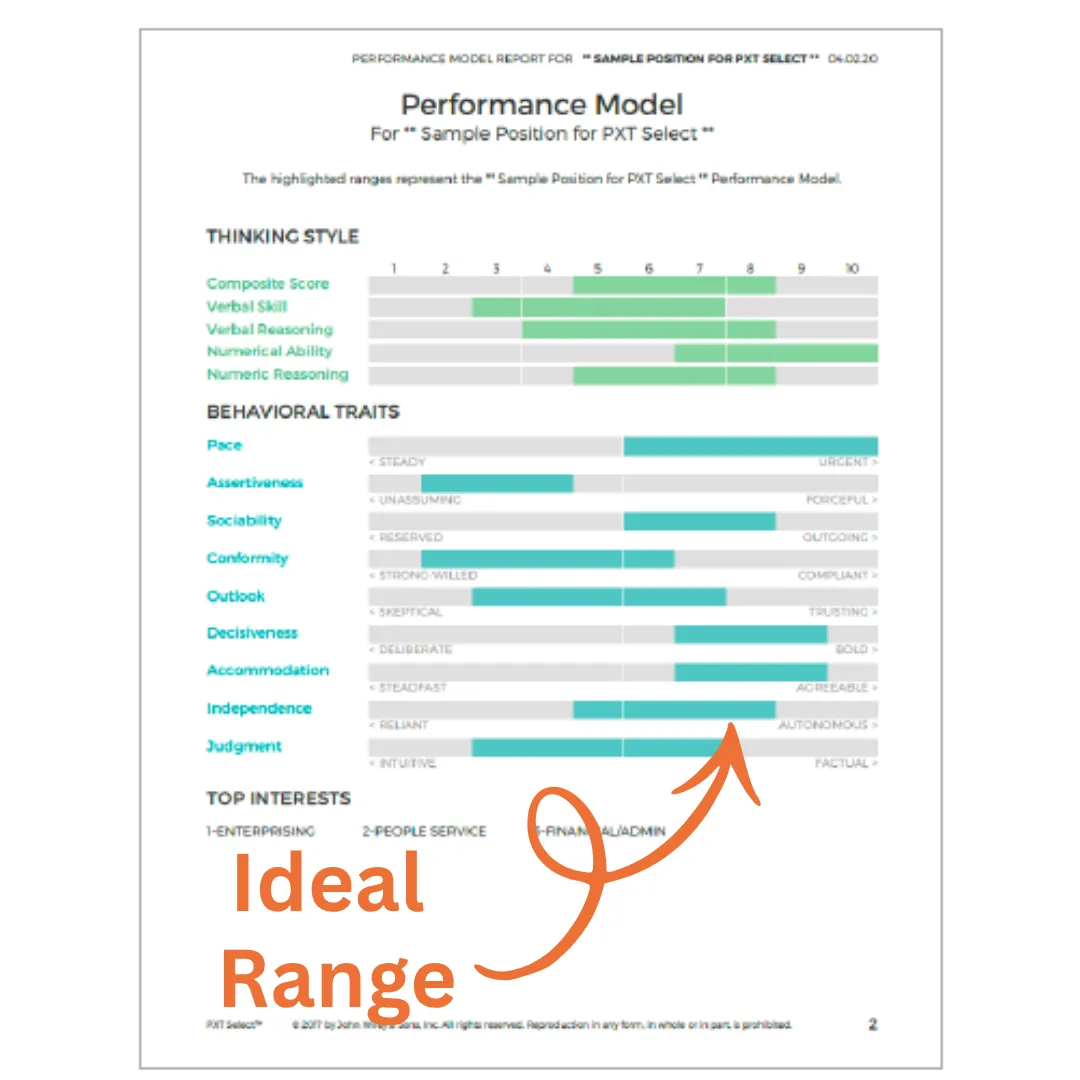
Before you assess a single candidate, we help you build a Performance Model for the role you're filling. A Performance Model is a snapshot of the ideal thinking skills, behavioral traits, and interests for that specific job. It's not a generic template, but a profile based on what actually drives success in that position within your organization. This gets your team on the same page about the qualities of the ideal applicant.
3 Ways to Build a Performance Model
Library Models: PXT Select includes a growing library of pre-built models aligned with common job roles, developed using tens of thousands of top and bottom performers. Use these as-is or as a starting point.
Job Analysis Surveys: Supervisors and others who know the job well complete a survey about job-related activities. This data is combined with a Library model to create a customized fit for your organization.
Concurrent Studies: Assess your current top performers and let the system build a model based on what makes them successful. You can even use low-performer data so you know what to avoid.
We'll work with you to build Performance Models that reflect your organization's unique culture, values, and expectations. So, you're not just hiring based on a job description. You're hiring based on what actually predicts success at your company.
PXT Select Reports:
One Assessment. Over a Dozen Free Reports.

For Hiring and Candidate Selection
Comprehensive Selection Report: The primary hiring report shows one candidate's results compared to the Performance Model in both graph and narrative form, including a percent fit score. Get customized interview questions so you and the hiring manager know just where to probe during the process.
Multiple Candidates Report: Compare finalists for the same role so you can see, at a glance, who fits best and where each person's strengths and gaps are.
Multiple Positions Report — Have a strong candidate who might fit several open roles? This report ranks one person to multiple Performance Models by fit percentage making this perfect for internal mobility, succession planning, and "best seat on the bus" decisions.
For Onboarding and Coaching
Coaching Report: Give this to the new hire's manager to provide personalized coaching tips for each scale, showing how the employee approaches their work and where they might benefit from support.
Manager-Employee Report: Compares the manager's behavioral traits to the employee's, side by side. It provides practical tips for building an effective working relationship from day one.
Individual's Feedback Report: A candidate-safe version with no scores and no Performance Model comparison. Written in a positive, constructive tone, it's perfect for sharing with new hires during onboarding to help them understand their own working style.


For Teams, Leadership and Succession Planning
Leadership and Sales Reports: Drill down for deeper insight about an individual's ability to lead or to thrive in a sales role.
Team Report: See how all team members compare across the nine behavioral traits. Each person gets a personalized version with tips for how their style interacts with the team's dynamics. Great for team-building sessions and identifying cultural gaps.
Multiple Positions Report: Compare a high-potential employee to future roles in your organization for succession planning, to understand development gaps, and to define targeted career paths.
Why Organizations Choose PXT Select
Over Other Hiring Assessments
If you've looked at other tools, you've probably discovered that they are either too basic, too complicated, or honestly, not suitable for candidate screening. At Work Ignited, we work hard to ensure we provide only top-rated, scientifically-backed assessment products that are also simple to administer and cost effective for your organization.

Measures the
Whole Person
Many assessments focus only on personality or only on cognitive ability. PXT Select measures both, plus motivational interests. You get a complete, three-dimensional view of every candidate.

Customized
Interview Questions
PXT Select doesn't just give a fit score, it generates behavioral interview questions specific to each candidate, with "listen for" tips so you know what a strong answer sounds like.

The Data Keeps Working After the Hire
Assessments are often lost after the start date. PXT Select fuels onboarding, team building, coaching, leadership, succession planning, and more. The ROI compounds over the entire employee lifecycle.

Backed by
30 Years of Research
Published by Wiley, PXT Select uses computerized adaptive testing for precision and has been validated across industries and job levels worldwide.
Free Report: The State of Hiring
Understand the impact of
Unconscious Bias
on hiring and promotional decisions.
Plus, get ideas for building a more inclusive workplace.
Download our State of Hiring report today!
How to Get Started with PXT Select
Getting up and running with PXT Select is simpler than you think. Here's how it works:

Choose Your
Approach
Choose to manage PXT Select through your own dashboard, or have us run assessments for you. If your hiring volume is low or you just want to try it out, having us manage it is a great way to start. For organizations with regular hiring needs, your own dashboard gives you full control.

Build Your
Performance Models
We'll walk you through building Performance Models for your key roles. This is the most important step, and it's where our experience makes a real difference. We've helped organizations across healthcare, manufacturing, financial services, education, technology, and more get this right.

Become a PXT Select Expert Practitioner
Our free, virtual, self-paced course teaches you to use PXT Select assessments across the entire employee life cycle. Then, we'll help you turn data into actionable insights, while boosting your knowledge, toolkit, and confidence with the tools.

Assess Your
Candidates
You'll have the ability to assess candidates as they apply or after you prescreen them. Results are available immediately.
Plus, you get our ongoing support whenever you need it.
How Much Does PXT Select Cost?
The PXT Select assessment costs $295 including the Comprehensive Selection Report, Leadership and Sales specialty reports, Individual Report for Onboarding, Coaching and Manager-Employee Reports for development, Team Reports, and more. You get the entire suite for each candidate for one low price. Plus, volume discounts are available for as few as 10 assessments and enterprise licenses are available as well.
We'll get you up and running, train your team and your managers, help you build your initial Performance Models.
Your own administrative dashboard and our friendly and responsive service is free, as long as you continue to purchase profiles from us.
Frequently Asked Questions About PXT Select
What does PXT Select measure?
PXT Select measures three areas: Thinking Style (cognitive abilities like verbal skill, verbal reasoning, numerical ability, and numeric reasoning), Behavioral Traits (nine workplace behaviors including pace, assertiveness, sociability, and more), and Interests (six motivational interest areas). Together, these give you a comprehensive view of a candidate's potential fit for any role.
How long does the PXT Select assessment take?
Most candidates complete the assessment in about 45 minutes. Some finish faster, others need a bit more time. The assessment uses computerized adaptive testing to prevent assessment fatigue and adjust difficulty based on each person's responses. Results are available as soon as the candidate finishes the questionnaire.
Can I use PXT Select for current employees, not just candidates?
Absolutely. Many of our clients use PXT Select for onboarding, coaching, internal promotions, team development, succession planning, career pathing, and more. The Coaching Report, Manager-Employee Report, Multiple Positions Report, and Team Report are specifically designed for these purposes.
How is PXT Select different from other assessments like DiSC, WorkPlace Big Five Profile, Predictive Index, and Hogan?
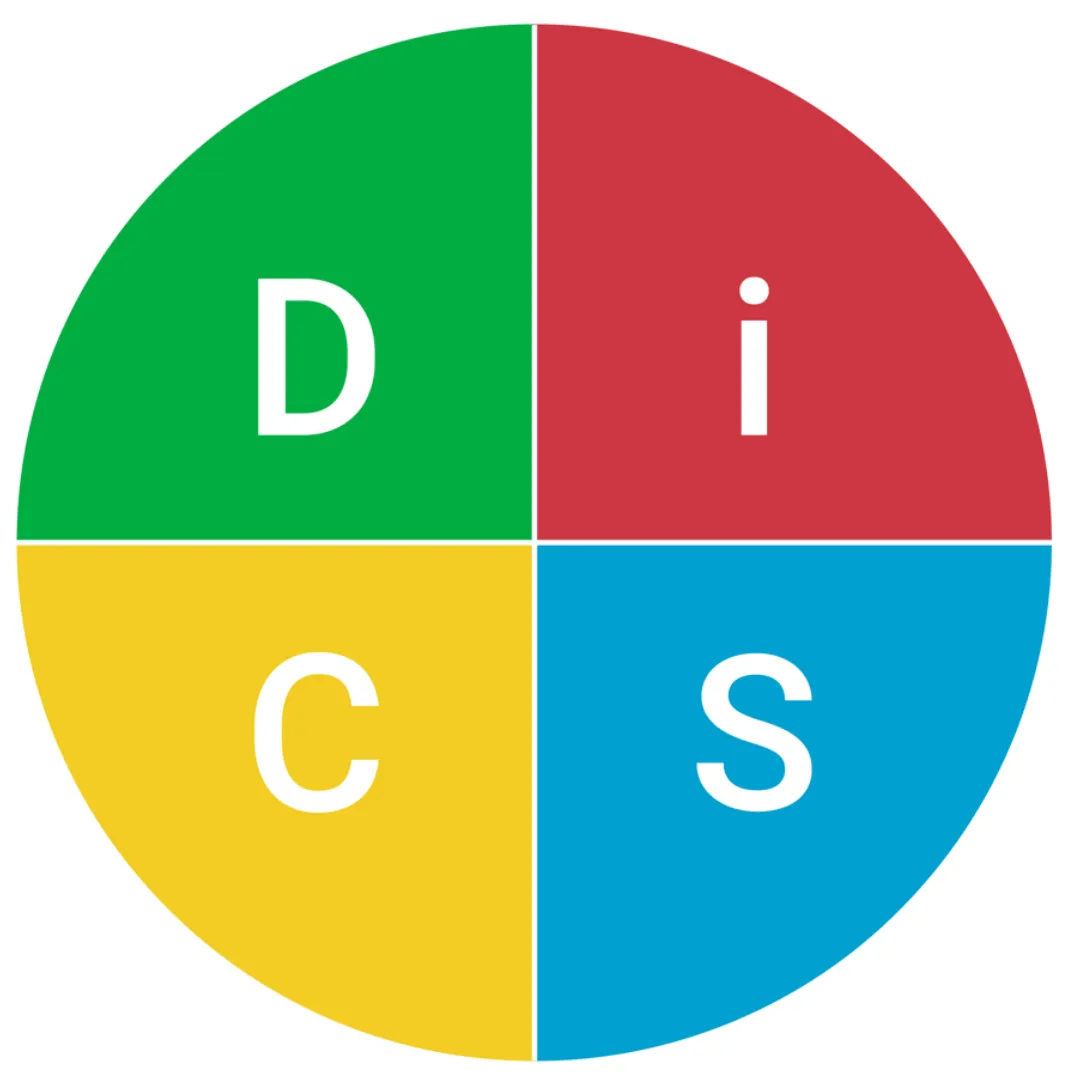
Everything DiSC measures behavioral styles for communication, teamwork, and development. It is not advised to use DiSC for candidate screening, as people can adapt their behaviors during the process. The WorkPlace Big Five Profile and Predictive Index are authorized for candidate screening, however, they are one dimensional tools that only measure personality or behavioral traits. PXT Select measures personality traits, thinking skills, and motivational interests for the same price. Hogan provides powerful assessments that are typically more complicated to understand, require deeper certification levels, and come at a higher price point.
Do I need certification to use PXT Select?
No. Certification is not required. A self-paced, virtual program will get you up to speed very quickly. Then, we provide hands on support for creating Performance Models, dashboard training, and helping you identify the best way to make PXT Select come to life in your organization.
Can I get my own dashboard to manage assessments?
Absolutely. In fact, we always say, "the keeper of the data has all the power!" We'll set up your dashboard at no charge, train you to use it, and support you on an ongoing basis as long as you continue to purchase your profiles from us. If you're hiring volume is low, we can also run assessments for you on a per-assessment basis.
What industries use PXT Select?
PXT Select is used across virtually every industry. Our clients use it in healthcare, manufacturing, financial services, technology, sales, education, not-for-profits, sports and entertainment, and more.
Is PXT Select best for certain levels within an organization?
PXT Select can be used at any level in an organization from entry level to executive level positions. The Performance Model library contains hundreds of proven profiles from all industries and levels within organizations.
A unique report is available for Leadership so you can understand how someone will set vision, develop people, and perform other leadership functions. A Comprehensive Selection Report has also been customized for sales positions, with the most notable difference being the types of interview questions the report recommends. A Customer Service Profile has been developed for those in front line service roles and a Step One Survey is available for the most entry level positions. All of these tools are included in your dashboard.
What if we're not interested in testing for cognitive ability or thinking skills?
PXT Select is available in a "non-cognitive" version that only assesses for behavioral traits and motivational interests. In some cases, you might choose to use this version. However, know that many studies have shown that cognitive skills are a strong predictor of performance in many positions. Also, cognitive skills are very difficult to build through development. So, in most cases, we encourage you to use the full assessment.
Why Work with Work Ignited for PXT Select?

Hi. I'm Amy Pearl.
I love assessments. What I love even more is helping people like you bring them to life in your organization.
For over 25 years, our team at Work Ignited has helped HR and talent acquisition professionals implement assessments that take the guesswork out of hiring. PXT Select is one of the most comprehensive tools we've ever worked with and our clients love how much value they get from a single assessment.
Whether you're hiring for one critical role or building an enterprise-wide selection process, I'll help you get started quickly and make sure you have everything you need for success.
Organizations That Trust Us With Their Assessments






Why Work With Us?
Responsive and Friendly Service: We answer your questions quickly, usually the same day.
Expert Training and Support: Our training and support gets your team and your leaders confident with PXT Select fast.
Step-by-Step Implementation: We'll walk you through your dashboard, Performance Models, assessments, and results.
Flexible and Budget-Friendly Options: Whether you want a full dashboard or a done-for-you approach, we make PXT Select work for your budget and your hiring volume.
25+ Years of Assessment Expertise: We've implemented assessments in just about every way imaginable in organizations of every size, across every industry. We know what works and we'll share our secrets with you!
Watch This Video to Learn More!


Click the images below to achieve your goals.

Assessment
Solutions
Explore our assessments for candidate screening, development, team building, succession planning, and more.

Fabulous
Together
Give the women in your organization the coaching, confidence, and connections they need to have successful careers and a fabulous lives.

e-Learning
Made Easy
Create an amazing learning experience
whether your team is
at the office, at home, or on the go.

Lead
Ignited
Be the best leader you can be
with this award-winning
learning opportunity.

Collaboration
Breakthrough
Create a workplace you love with our best-selling book, employee survey, and interactive team experience.

Coaching
Conversations
Replace your archaic review process
with an online system to
guide GREAT conversations.
Download the Best Interview Questions
for Virtual Job Candidates
Look who's using our assessments today:






Check out our recent news and blog.

How to Coach Leaders to Adapt Their Style Under Stress
Don’t Let Stress Hijack Your Leadership: Coach Leaders to Adapt Their Style When It Matters Most
If you’ve ever watched a great leader turn into a bottleneck, a bulldozer, or an emotional basketcase the moment pressure hits, you already know the problem. Stress doesn’t just test leaders. It exposes the gap between how they want to show up and how they actually do.
Can you coach leaders to handle stressful situations better?
Yes, you can absolutely coach leaders to manage their stress responses, but not by telling them to “calm down” or “be more self-aware.” The key is helping them understand what’s happening before they react. In this post, I’ll share my personal stress struggles, what happens to leaders, a four-step coaching framework, and how you can use Everything DiSC Agile EQ to expedite the process!
I Know This Because I Live It
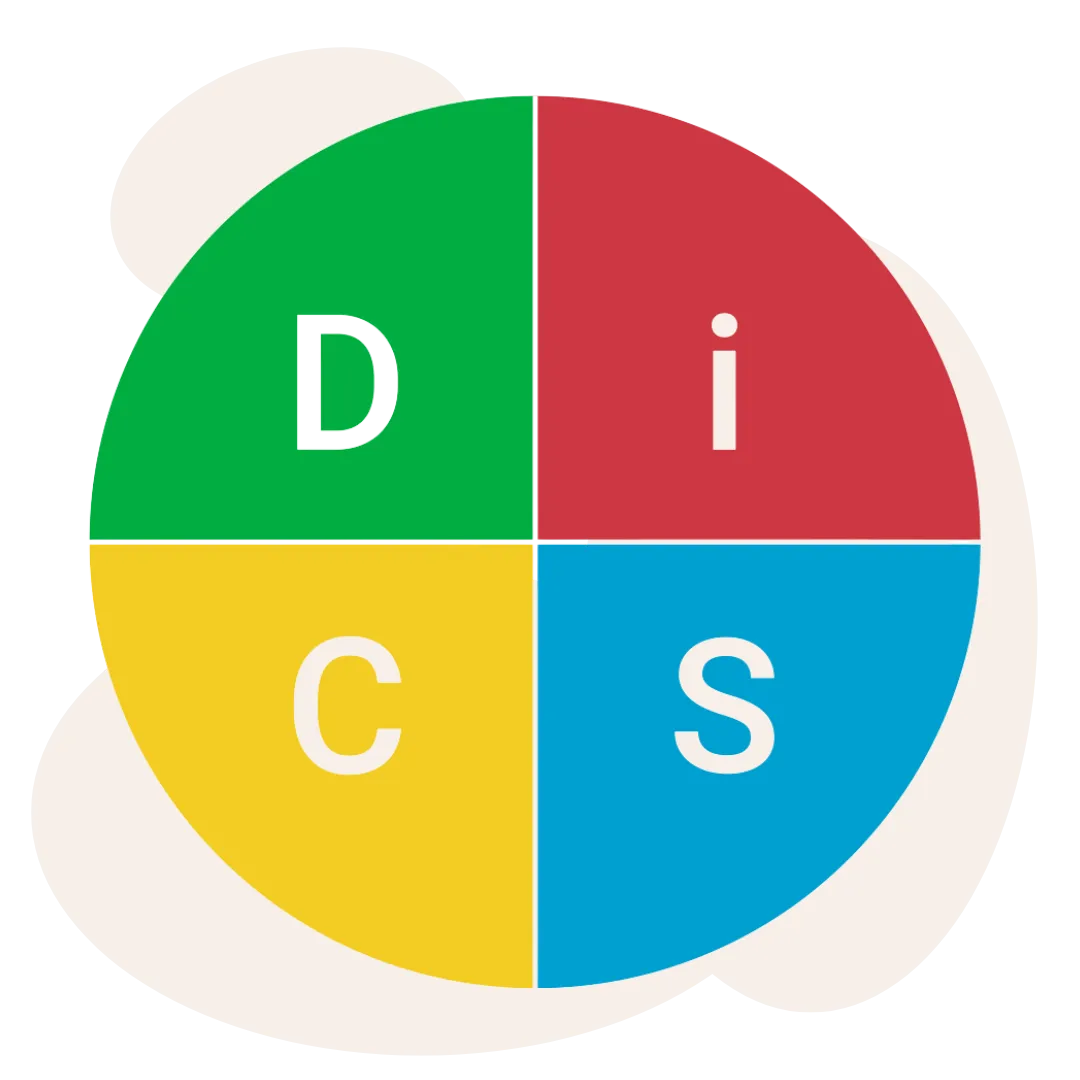
I’m high in Conscientiousness and Dominance on the DiSC map. I’m focused on quality results, solving problems, and making things happen. When things are going well, those strengths serve me. But when stress hits? I become a different person.
My C says, “I can do it better,” and my D says, “I can do it faster” myself. I become too independent, leave people out, and if my high intensity kicks in, you can count on a good dose of impatience and sarcasm.And empathy, which I’ll be honest, I don’t have a ton of to begin with, goes completely out the window. I stop including others. I stop listening. I just go.
I’ve learned that for me, the trigger is time management. When I manage my time well, I can stay calm and composed. When my schedule is packed too tight or something unexpected pops up, I’m like a wild woman. Knowing that about myself has been a game-changer, not because I never get stressed, but because I can catch the early warning signs before I go down a path I’ll regret.
The leaders you work with are no different. They all have a version of this story. The question is whether they’re aware of it and whether they have the tools to do something about it.
Why Emotional Agility Is a Leadership Skill, Not a Soft Skill
If you’re an HR or L&D professional reading this, you might be wondering how to position emotional agility with your leadership team or to convince a leader that emotions are more important than ever. In my experience, it lands when you connect it to two realities:
First, what today’s workforce is looking for has changed. People aren’t just staying at organizations because of the work itself. They’re looking for three things: a sense of purpose, a feeling of belonging and camaraderie, and feeling valued for what matters to them not just what matters to the company. Employees want a stronger emotional connection with their workplace, their coworkers, and their boss. Leaders who can’t meet people on that level will struggle to retain and motivate their teams. This is one reason why emotional agility is so critical for today’s leaders. (If you’re exploring this theme further, check out our post on the top challenges facing today’s learning and development professionals.)
Second, leadership at the highest levels is mostly about strategy and people. When you grow in an organization, your job description gets narrow. You’re planning strategic direction, working on high-impact projects, and, here’s the shift. You’re not just managing people anymore. You’re mentoring them and mentoring is a fundamentally different relationship. It’s more personal, more emotional. It requires the ability to connect with people and meet them where they are. Leaders who lack that emotional agility will hit a ceiling, no matter how sharp their strategic thinking is. (We’ve written more about why human skills are still the biggest differentiators in today’s workplace.)
What Happens to Leaders Under Stress
Every leader has strengths. Those strengths are what got them promoted, what earned them trust, and what makes them effective on a good day. But under stress, those same strengths get cranked up to a level that stops being helpful.
Here’s what it looks like by DiSC style:
Dominance-style leaders are naturally results-driven and decisive. Under stress, that drive can turn aggressive. They might bulldoze through conversations, dismiss input, and make unilateral decisions that leave their team feeling run over.
influence-style leaders bring energy, enthusiasm, and new ideas. Under stress, they can become too emotional, too impulsive, or so focused on keeping things positive that they avoid the hard conversations entirely.
Steadiness-style leaders are naturally accommodating and supportive. Under stress, that desire to serve others can go into overdrive. They might take on everyone else’s work, avoid conflict, and fail to stand up for their beliefs.
Conscientiousness-style leaders value quality, accuracy, and process. Under stress, they dig their heels in. They could become unyielding perfectionists who slow everything down because nothing meets their standard, or they withdraw entirely and stop communicating.
The pattern is the same across all styles: under pressure, leaders don’t develop new bad habits. They overuse the strengths they already have. And when a strength goes too far, it can become a weakness.
This Is Where Agile EQ Changes the Game
You likely know that Everything DiSC helps people understand how they communicate and behave in the moment. Everything DiSC Agile EQ goes one level deeper. It’s about what’s happening in your head before you say something or take action.
Everything DiSC Agile EQ looks at eight distinct mindsets: Dynamic, Outgoing, Empathizing, Receptive, Composed, Objective, Resolute, and Self-Assured. Your Agile EQ profile shows you which mindsets come naturally to you, and which are stretch mindsets that require more deliberate effort.
Here’s what matters: the mindset that’s hardest for a leader is almost always the opposite of where they naturally live. In my case, Empathy and Receptive are my stretch mindsets. For someone who’s naturally outgoing and relationship-focused, staying Objective and Composed might be the stretch. It’s different for everyone, but there’s always a pattern.
The power of Agile EQ is that it makes these mindsets buildable. Think of it as a toolkit. Once you’ve built all eight mindsets into your toolkit, even the ones that don’t come naturally, you can walk into any situation, calm or chaotic, and feel confident and prepared to respond instead of just react.
And, here’s a bonus. If you’re leaders already have an Everything DiSC on Catalyst Profile, they can get Agile EQ with just a flip of a switch. They don’t have to answer any additional questions!
A Simple Framework for Coaching Leaders Through Stress: Notice, Name, Navigate, Normalize
Whether you’re an HR professional coaching a leader through a tough season, a facilitator looking to strengthen your workshop content, or a leader coaching one of your own team members, here’s a simple four-step framework you can use to help other respond appropriately when feeling stressed.
Step 1: Notice
Help the leader recognize what’s happening in the moment or better yet, before the moment. This starts with identifying triggers. What situations, environments, or pressures consistently push them into overdrive? For me, it’s a packed schedule. For someone else, it might be dealing with someone they perceive as incompetent, facing public criticism, or feeling out of the loop. The goal is self-awareness at the trigger level, while there is still time to adjust. Suggest that the leader monitor stressful situations for a two-week period – what was the situation, what led up to the encounter, what was the real driver behind their response? There’s always a pattern. Identify it and become more proactive in managing it ahead of time.
Step 2: Name
Give the response a label. This is where the DiSC language and Agile EQ mindsets become incredibly useful. Instead of just feeling “stressed,” a leader can say, “I’m defaulting to my independent mindset and shutting people out,” or “I’m losing objectivity because I’m leading with emotion right now.” Naming it takes the power out of it. It moves the response from something that’s happening to them to something they’re doing. That distinction is everything, because you know what you must stop doing and what you must start doing in the moment.
Step 3: Navigate
Now the leader makes a deliberate choice. Instead of riding the default mindset deeper into stress behavior, they reach into their toolkit and choose a different mindset for the situation. Maybe that means pausing to ask for input instead of plowing ahead. Maybe it means taking a breath and approaching a conversation with empathy instead of sarcasm. Maybe it means stepping back from the emotion and making a more objective decision. This is the stretch. It won’t feel comfortable, and that’s the point. Agile EQ provides dozens of ideas for building the capacity to go beyond what’s natural when the situation demands it.
Step 4: Normalize
This might be the most important step, especially for the person doing the coaching. Remind the leader that this is a human experience, not a personal failure. Everyone responds differently in stressful situations. Every leader has blind spots. The goal isn’t to eliminate the stress response. It’s to shorten the time between reacting and course-correcting. The more they practice, the smaller that gap becomes. And over time, reaching for a stretch mindset starts to feel less like a stretch and more like a choice they’re confident making.
Why This Matters Right Now
If you’re in HR or L&D, you already know that 2026 is shaping up to be another year of significant change. Leaders at every level are being asked to do more with less, navigate uncertainty, and still show up as the kind of boss people want to work for. The leaders who thrive won’t be the ones who white-knuckle their way through it. They’ll be the ones who’ve built the emotional agility to adapt, meeting after meeting, conversation after conversation, without losing themselves or their people in the process.
Want to Explore Agile EQ for Your Organization?
Everything DiSC Agile EQ is available as a standalone experience or as an add-on for teams that have already completed DiSC Workplace on the Catalyst platform. You can download sample Agile EQ profiles and explore the full Everything DiSC suite here.
If you’d like to talk through how Agile EQ could fit into your leadership development, coaching, or team-building efforts, I’d love to connect. Schedule a conversation with me here.
Frequently Asked Questions
Is Agile EQ the same as an emotional intelligence test?
I define emotional intelligence simply the ability to know yourself, the ability to read others, and the ability to use that information to build good relationships. So, in that respect, Agile EQ and Everything DiSC are excellent tools for measuring and building emotional intelligence.
However, many EQ products go overboard, integrating lots of competencies and few recommendations. Agile EQ is primarily a development tool. Instead of asking “What’s your EQ score?” it asks, “How could you actually improve your EQ?” It measures your comfort level with eight different mindsets and gives you simple and practical strategies for building the ones that don’t come naturally.
Do I need to have done DiSC Workplace before doing Agile EQ?
It’s not required, but it helps. DiSC Workplace gives people the foundational language around their communication style. Agile EQ builds on that by going deeper into the mindsets behind those behaviors. If your team is on the Catalyst platform, Agile EQ integrates seamlessly as an add-on experience.
Can I facilitate Agile EQ without being DiSC certified?
Yes. Certification is recommended but not required. A facilitation kit is available that includes fully scripted sessions, activities, and videos. That said, if you want to go deeper and customize the experience, certification gives you a much stronger foundation. We’ll be covering that topic in an upcoming post. Stay tuned.
Is this only for senior leaders?
Not at all. Agile EQ is valuable at every level of leadership and even for individual contributors. That said, it’s especially impactful for mid-level managers who are building a broader set of relationships and senior leaders who are shifting from managing to mentoring. The emotional demands increase as you move up, and Agile EQ gives leaders the tools to meet those demands.
What if a leader says they don’t need help with emotional intelligence?
That’s actually pretty common, and it’s often the leaders who most need it. I’ve found that framing it as “emotional agility” rather than “emotional intelligence” makes a difference. Agility implies action, adaptability, and strength. It doesn’t feel soft. And once leaders see their own Agile EQ profile and recognize themselves in the mindset descriptions, the resistance usually fades. It’s hard to argue with data. (Spoken by someone who leads with an Objective mindset!)