






Everything DiSC Profiles & Certification
for Your Organization
Transformational Learning.
Proven Impact.

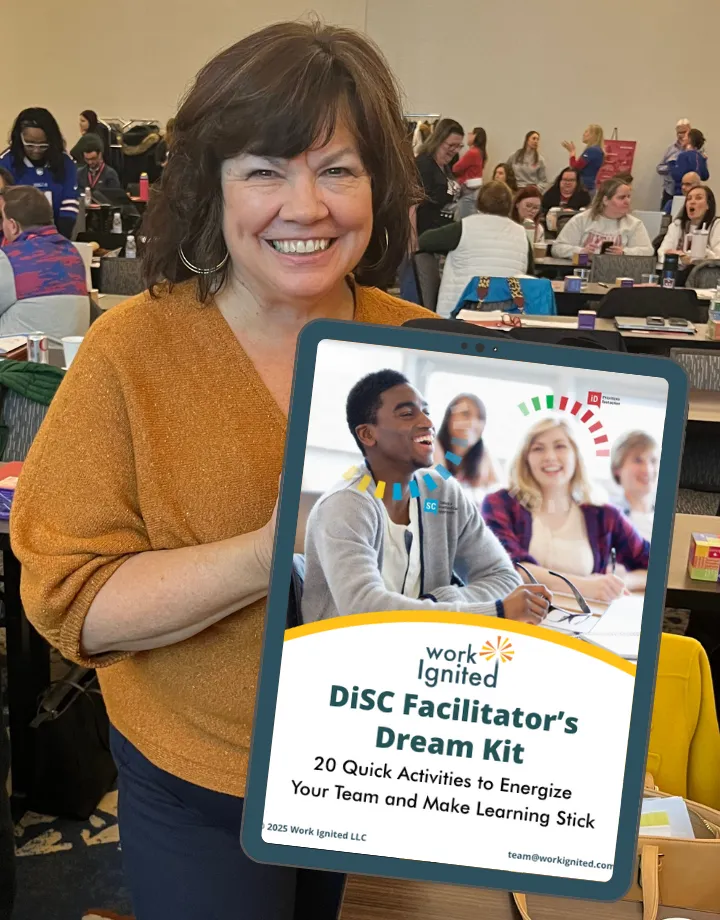
The DiSC Facilitator's Dream Kit
Download 20 Quick Activities to Energize Your Team and Make Learning Stick
If you're searching for ideas to spice up your DiSC training and teambuilding sessions, grab this freebie today. I've compiled some of my best activities to make your job as a facilitator easy peasy.
What is Everything DiSC?
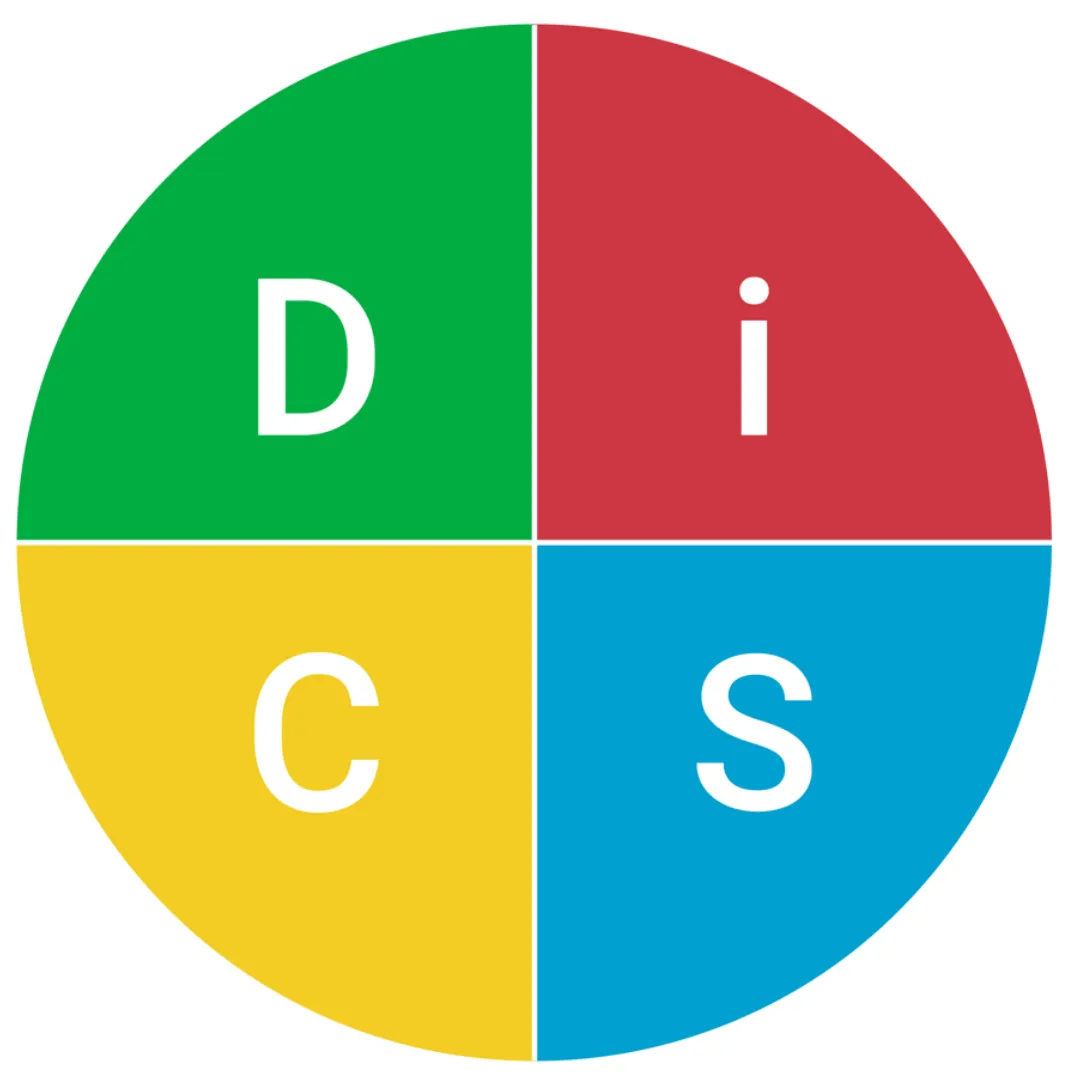
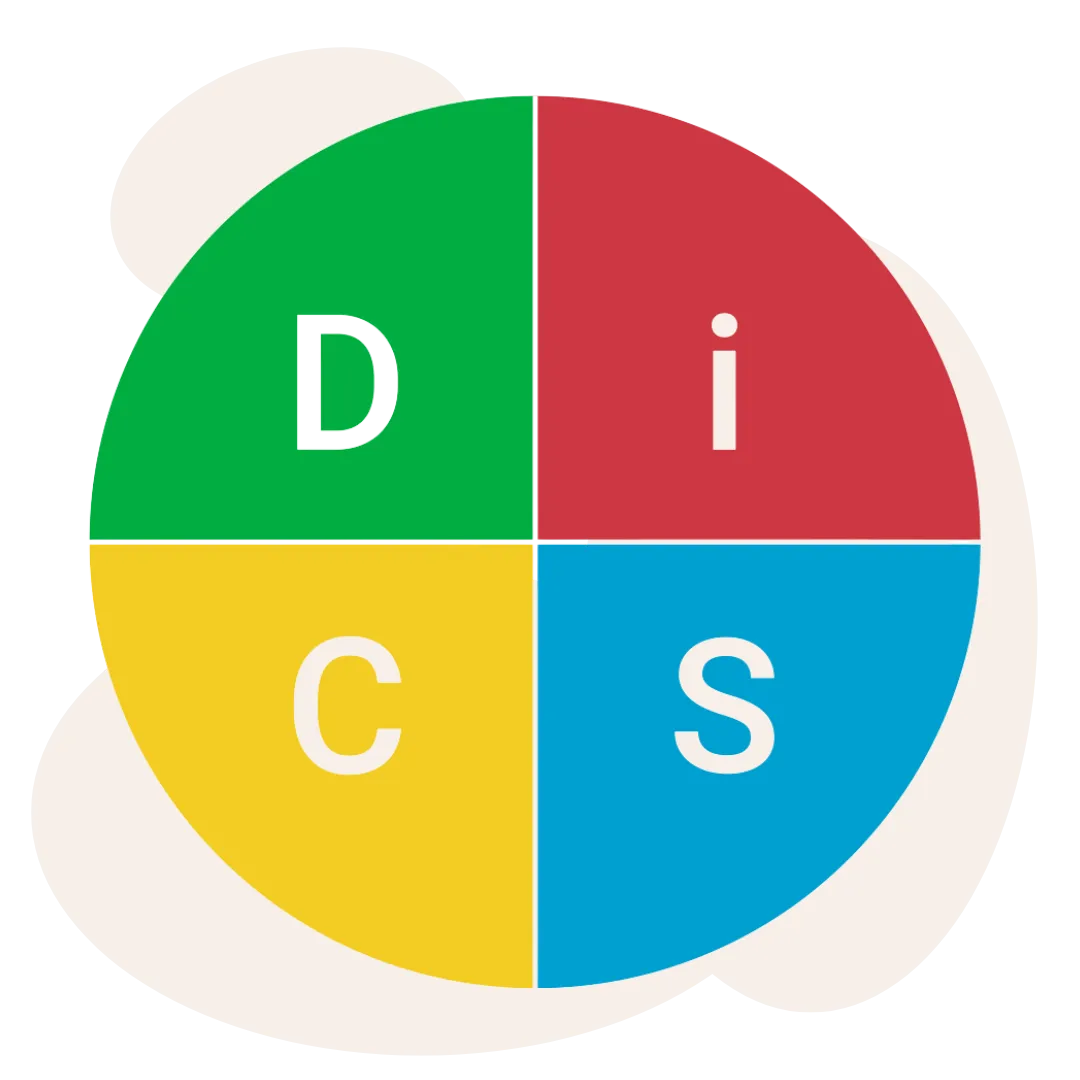
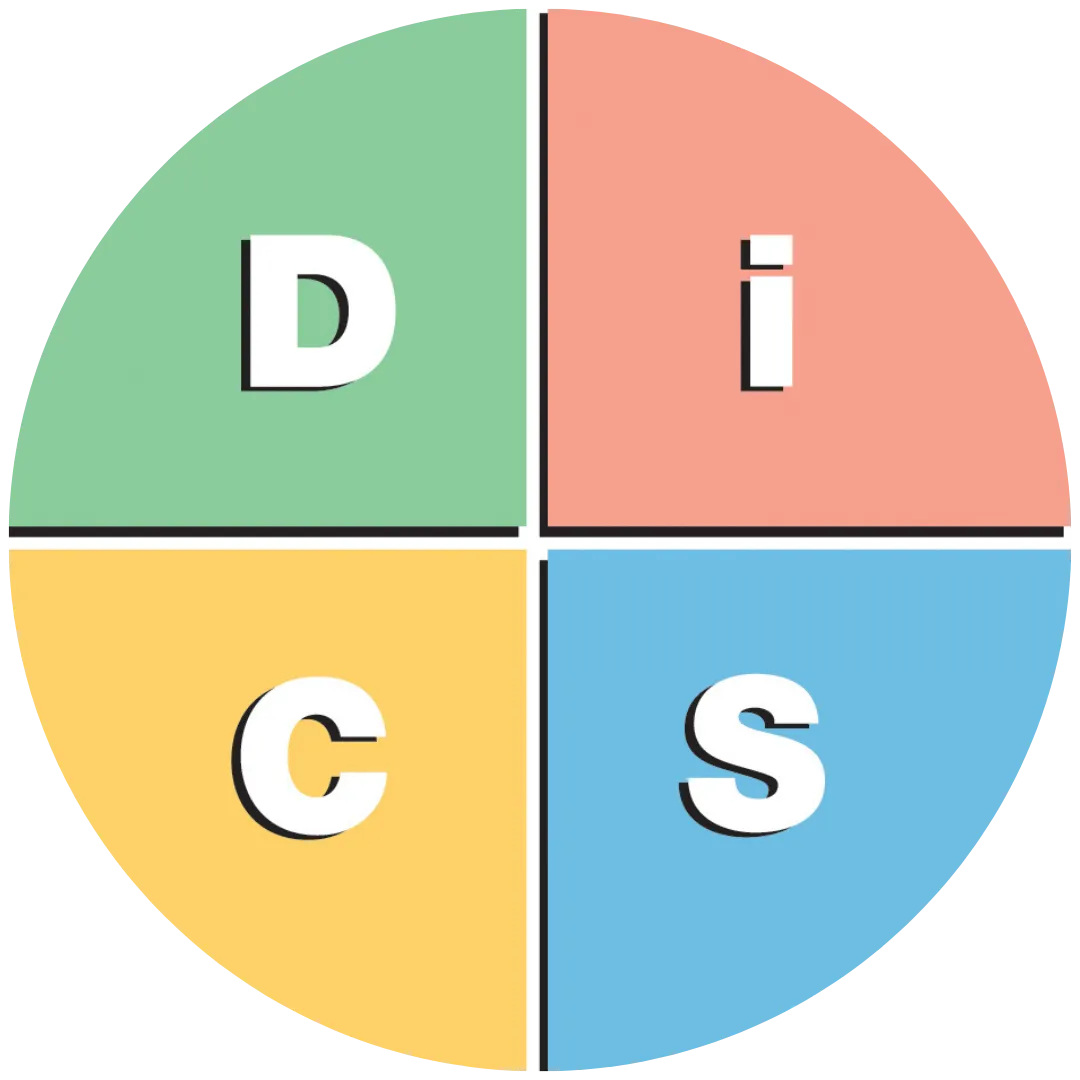
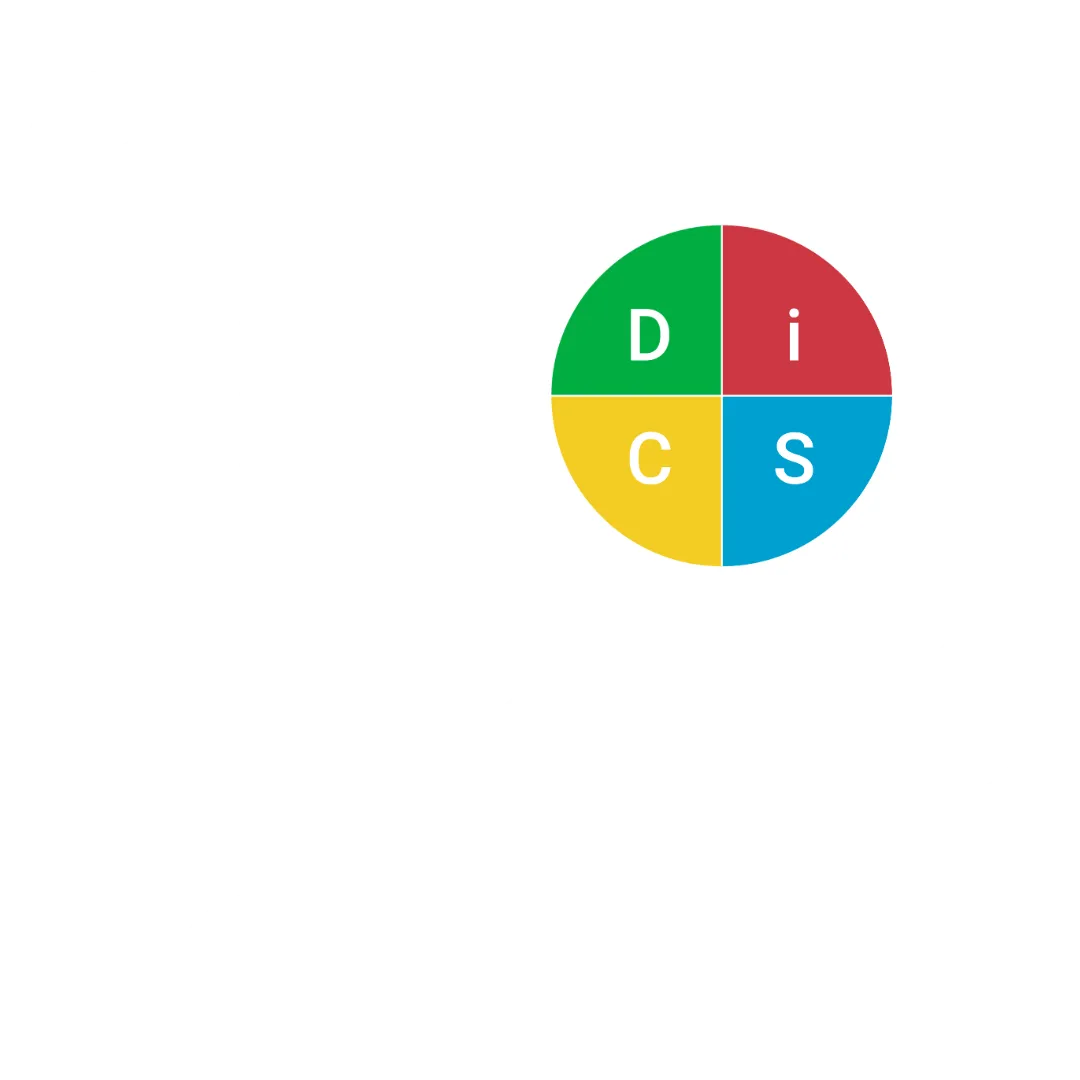
Everything DiSC is a research-based behavioral assessment that helps people understand their natural communication styles and how to work better with others. Unlike personality tests, DiSC focuses on real-world workplace behaviors like communication, teamwork, conflict, and leadership.
As a Diamond Award winning Everything DiSC Authorized Partner, we provide access to the complete suite of Everything DiSC Profiles including Workplace, Management, and Agile EQ, customizable facilitation materials, and the support you need to feel confident as a learning and development professional. Our goal is to help you use DiSC not just to increase awareness, but to build habits that drive measurable improvements in teamwork and performance.
Check out
Everything DiSC on Catalyst
Everything DiSC on Catalyst is revolutionizing how people learn about themselves and their co-workers. Learners get:
Real time access to their Everything DiSC Profiles
The ability to create comparisons and group reports with their colleagues in your organization
Personalized tips for building connections, handling tense situations, managing others, building mindset and resilience, and much more
Ongoing learning and activities to keep DiSC alive
Watch this 2 minute video to learn more.
Getting started is easy. We can walk you through the process and have you up and running today!
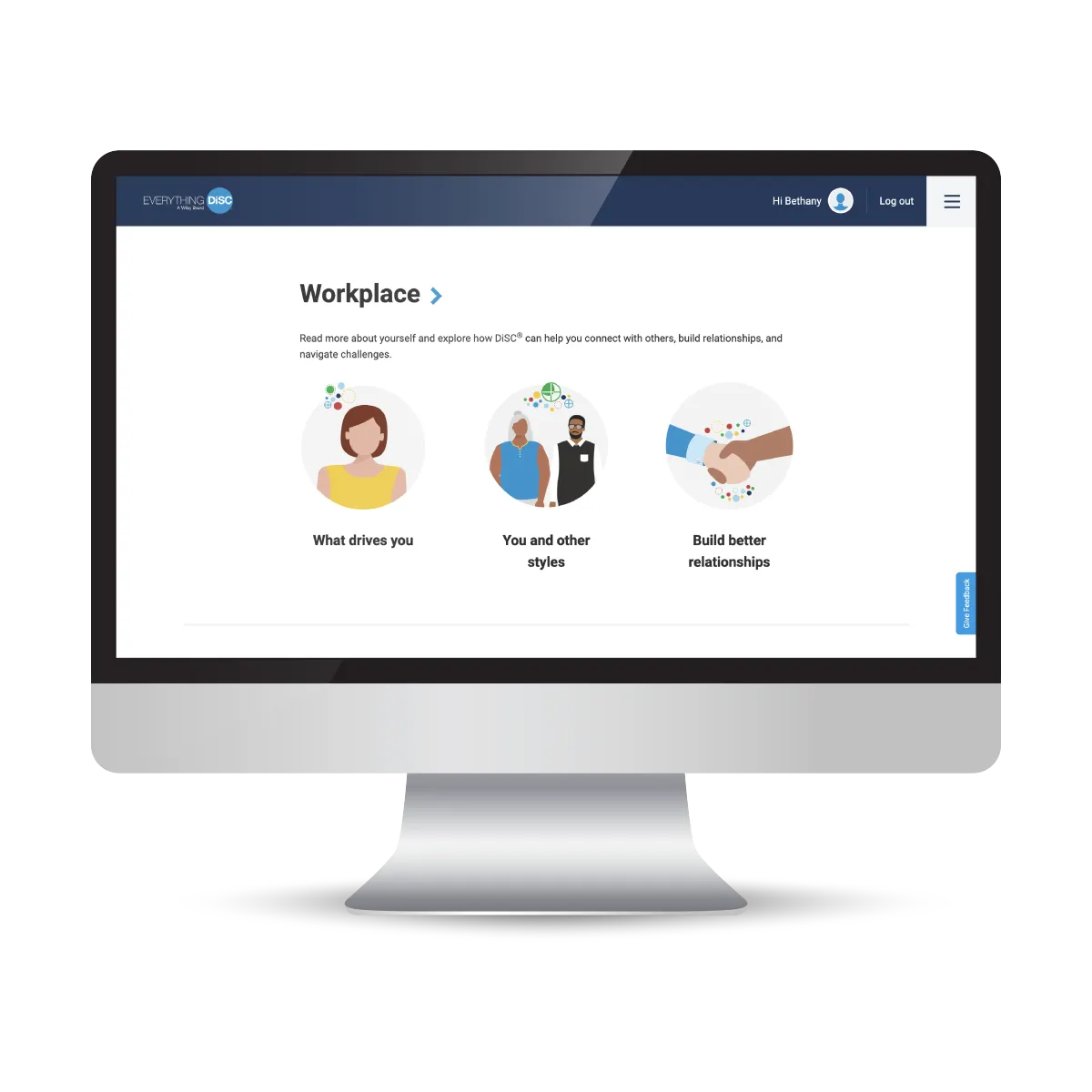
Choose the Right Everything DiSC Profile

Workplace On Catalyst
Learners understand their behavioral styles, how to read others, and how to use that information to improve communication, manage conflict, and collaborate with their teammates.
Perfect for:
Onboarding new employees
Teambuilding workshops
Building collaborative cultures
What's included:
Explore your DiSC style on Catalyst or a downloadable profile report
Explore motivators and stressors
Get personalized tips for connecting, influencing, and handling tense situations

Agile EQ on Catalyst
Today's world is full of change, uncertainty, and anxiety. Learners explore their natural and stretch mindsets, and get dozens of tips for building resilience and emotional intelligence.
Perfect for:
Building emotional intelligence
Developing and coaching leaders
Launching project teams
What's included:
Explore your DiSC style on Catalyst or a downloadable profile report
Identify natural and stretch mindsets
Get personalized tips for developing your mindsets to feel more confidence and prepared in any situation

Management on Catalyst
Discover how to understand the unique styles of each team member. Learners identify strategies for directing, delegating, and creating a motivating environment that drives results.
Perfect for:
Building management skills
Training supervisors and managers
Developing project managers
What's included:
Explore your DiSC style on Catalyst or a downloadable profile report
Explore your management style
Get personalized tips for giving direction, delegating, developing, and creating a motivating environment
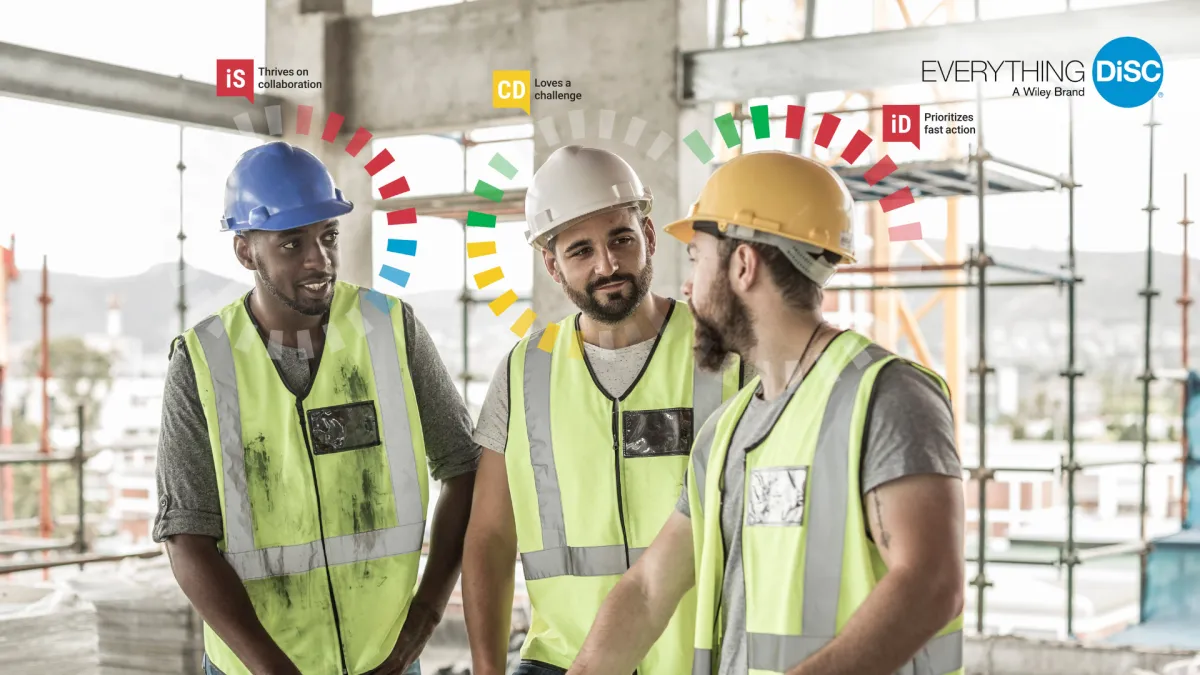
Productive Conflict
With Everything DiSC Productive Conflict, learners explore their responses in conflict and how to keep responses like caving in or getting defensive from getting in the way.
Perfect for:
Team members at any level
Teambuilding workshops
What's included:
Personalized profile report
Explore your DiSC strengths and challenges in conflict
Identify your natural responses in conflict
Get personalized tips for managing your thinking and reactions in conflict situations

Sales
Your team will learn about their natural selling styles. Then, they'll identify client's buying styles and get tips for overcoming objections and closing the deal.
Perfect for:
Sales team members at any level
Sales conferences or retreats
What's included:
Personalized profile report
Explore your DiSC selling strengths and challenges
Identify clients' buying styles
Get personalized tips for identfying clients' priorities and adapting to their styles
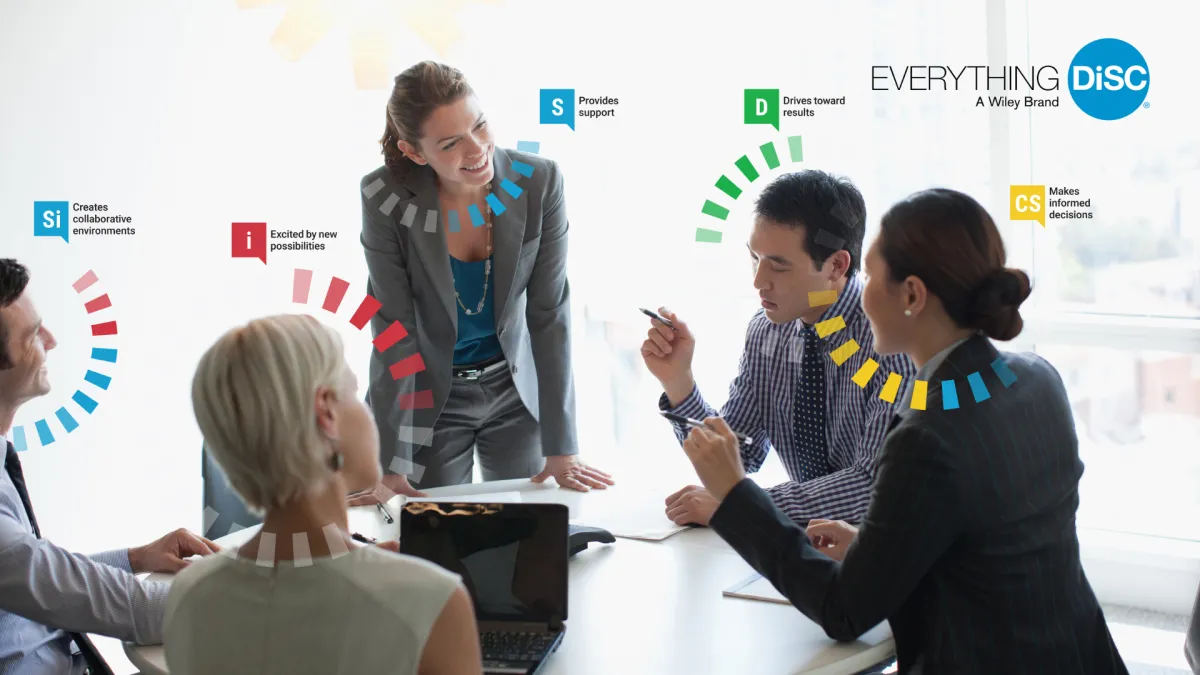
Work of Leaders
Leaders learn to use their styles to establish vision, build alignment, and champion execution to create your organization's unique culture.
Perfect for:
Senior leaders or mid-level leaders broadening their responsibilities
What's included:
Personalized profile report
Explore your DiSC style and how it impacts organizational leadership
Identify your approach to setting vision, building alignment, and championing execution
Get personalized tips for building 18 drivers of leadership success
Why Organizations Choose Everything DiSC

Scientifically
Validated
40+ years of research & a 90%+ accuracy rating

Used
Globally
10+ million learners in
150,000 organizations
Catalyst
Platform
Personalized tips and ongoing learning
Customizable
Facilitation
Powerpoints, videos & turnkey activities
Proven
ROI
Measurable improvements
Introducing Worksmart
Check out the newest innovation from Everything DiSC.
Flexible, one-hour training modules that help managers apply DiSC to real world interpersonal challenges.
On-demand action plans help managers elevate interactions and unlock team performance.
5 Personalized Management Training Modules
Giving Constructive Feedback
Managing Conflict
Empowering Your Team
Helping Your Team Navigate Change
Motivating Your Team
With our unparalled support, you get a variety of Everything DiSC implementation options and everything you need to
lead workshops, teambuilding events, and coaching sessions.

Become a
Certified Practitioner
Build your skills, toolkit, and confidence in just two weeks. In addition to Wiley's official certification, you'll get lots of facilitation materials, ongoing training, and a network of assessment lovers just like you through our Catalyst Practitioner Experience!

Get Do-it-Yourself
Facilitation Materials
You don't need to be certified to use Everything DiSC Profiles or facilitation materials. Get scripted activities, customizable PowerPoint presentations, engaging video, and handouts to make your workshops impactful for learners and easy for you.

Get a Dashboard & Credits
to Order Your Profiles
Are you just looking for a dashboard to order Everything DiSC Profiles? We support over
100 global Everything DiSC Administrators. Our clients appreciate our responsive and friendly service. We can get you up and running today!
How much do DiSC Profiles cost?
DiSC Profiles are sold in credits. Organizations can purchase credits and use them to
order any Everything DiSC Profile. Credits never expire.
The chart below shows the cost of one Profile. Volume discounts are available.
How To Get Started with Everything DiSC
Choose the
Right Profile
Choosing the right profile from the start will help you get the best ROI.

Identify Your
Learning Approach
Determine if a workshop, one-on-one, virtual, or
e-learning is best for your team.

Order Your
Profiles
Set up your dashboard, organize departments, and set up groups for easy administration.

Facilitate an Engaging Experience
Use our scripts, videos, PowerPoints, and other resources to engage your learners.
Use Catalyst for Ongoing Learning
Micro-learning modules and virtual team activities keep DiSC alive and transform your culture.
We make assessments easy!

Hi, I'm Amy Pearl!
I'm so glad you're visiting our website. For over 25 years, our team at Work Ignited has helped human resources and learning professionals around the world to use assessments for candidate screening, training, teambuilding, coaching, succession planning, and more.
But what really matters? We're known for being great problem solvers, delivering impactful learning experiences, making implementation easy, and most importantly, developing long-term partnerships (and even friendships) with our clients.
Let's hop on a call to brainstorm ideas to achieve your goals!
I'm grateful for amazing assessment clients like these...



Why work with the team at Work Ignited?
Diamond Award Everything DiSC Partners
Responsive
& Friendly
Service
Step-by-Step Implementation Support
Flexible &
Budget-Friendly
Options
25+ Years
Igniting
Our Clients
Check Out Our Popular DiSC Blog Posts
Where do I get help with Everything DiSC?

What is the Catalyst Practitioner Experience?
5 Mistakes DiSC
Facilitators Make
Frequently Asked Questions About DiSC Profiles
Who is DiSC best suited for?
It's called Everything DiSC because it's suited for everyone:
* Leaders at all levels
* Teams navigating communication challenges
* New employees trying to fit in and understand the culture
* Hybrid or cross-functional teams
* Employees at any level building self-awareness
If your organization values collaboration, accountability, and a healthy culture, DiSC is a great fit.
How is Everything DiSC different from other assessments?
Everything DiSC stands out for its:
✔ Workplace focus - It's practical, not theoretical.
✔ Simple - It's easy to understand and remember styles and action items.
✔ Application-focused - The content, training, and coaching tools are easy to use.
✔ Catalyst - The digital platform reinforces learning long after the workshop is over.
✔ Cost Effective - We make it fit your budget.
✔ Easy to get started - Schedule a call with us today!
Do we need a certified DiSC facilitator?
Technically no.
We can facilitate a workshop for you. Or, you can download scripts, customizable PowerPoints, engaging videos, and other facilitation materials from our Catalyst Practitioner Experience available in our online store.
Most of our clients like the knowledge, toolkit, and confidence that comes along with our Certified Practitioner Program. Click here for more information.
Do you offer private workshops for teams?
Yes. We deliver customized learning experiences for teams and organizations of all sizes - in person or virtual. Typical engagements include:
90-minute virtual team session
Half day management training
Teambuilding events
Conflict and feedback sessions
All sessions include Catalyst access and real-world application.
How long does a DiSC workshop take?
Everything DiSC is very flexible.
You can deliver a good introduction in 90 minutes and a deep dive in a half-day. The modular design of the facilitation materials also allows you to build on the content over time. And, our Worksmart Management Modules take less than an hour.
We can help you choose the structure that fits your goals and culture.
What's the best way to get started?
Schedule a call with Amy. She will help you choose the right profile based on your needs and learning format. Then, she'll help you launch your learning program ensuring you have everything you need for success.
Can we DiSC Profiles and manage Catalyst through Work Ignited?
Yes. We are an Everything DiSC Authorized Partner.
You can:
✔ Purchase profiles directly through us
✔ Get support managing Catalyst
✔ Access tools, facilitation materials, and live help
✔ Get your own dashboard and receive training for your internal admins
We make it easy for you to implement, scale, and sustain DiSC long-term.
Can I try a sample Profile first?
Yes or simply scroll up and download samples up above!
Click the images below to achieve your goals.

Assessment
Solutions
Explore our assessments for candidate screening, development, team building, succession planning, and more.

Fabulous
Together
Give the women in your organization the coaching, confidence, and connections they need to have successful careers and a fabulous lives.

e-Learning
Made Easy
Create an amazing learning experience
whether your team is
at the office, at home, or on the go.

Lead
Ignited
Be the best leader you can be
with this award-winning
learning opportunity.

Collaboration
Breakthrough
Create a workplace you love with our best-selling book, employee survey, and interactive team experience.

Coaching
Conversations
Replace your archaic review process
with an online system to
guide GREAT conversations.
Download the Best Interview Questions
for Virtual Job Candidates
Look who's using our assessments today:



Check out our recent news and blog.

5 Reasons to Assess Critical Thinking Skills of Your Job Candidates
Quick Answer:
Research shows that cognitive ability (aka Thinking Style or Critical Thinking Skills) is a strong predictor of job performance. It reveals who can handle a role’s complexity as it grows, not just today. It’s genuinely difficult to fake and its predictive power doesn’t plateau over time.
I’ll be straight with you on something I’ve noticed myself and that the research generally backs up: thinking style seems to be one of the more fixed traits a person has. You either have a certain level of raw cognitive horsepower, or you don’t, and I haven’t found solid evidence that it can be meaningfully trained up in adulthood the way a skill or a habit can. That’s not a life sentence to low-level work for anyone, and it’s definitely not a measure of someone’s worth. It just means it’s a piece of the puzzle worth being honest about rather than assuming everyone can be coached into the same cognitive range with enough effort and a good manager.
It's also important to note that not everyone needs to be at the top of the critical thinking scale. Plenty of people build extraordinary careers on the strength of their behavioral traits and hard-won experience, without ever needing to be a rocket scientist.
But, failure to measure cognitive ability during the hiring process can have big negative consequences!
Many years ago, I managed a bank branch. One of the gals on my team, let's call her "Lucy," worked at the customer service counter. Lucy was lovely - pleasant, personable, detail-oriented, and a diligent worker. We both moved on from that branch and I never saw Lucy again.
Fast forward 20 years, I was coaching the Chief Operating Officer at a large hospital. Let's call him Jack. One day, Jack was lamenting over a financial analyst on his team. He was frustrated because she would do the analysis he asked her to do and produce the reports he asked her to produce, but she never took it a step farther. She didn't dive deeper into the data to understand the trends or the root causes of the results, nor did she ever make any recommendations for improvement. He was particularly struggling because she was genuinely a nice person who was always willing to help others.
I asked if he used an assessment during the candidate screening process and sure enough, he did. I told him to pull up the results so we could take a look. It wasn't surprising to me that her critical thinking skills were average. She was doing average thinking work like analysis and reporting. What was surprising to me was that it was Lucy from my old bank branch! Her assessment results couldn't have painted a truer picture of her - kind, helpful, accommodating, a strong desire to serve, detail-oriented - perfect for the customer service role that I remember her doing so well. But, I also knew instantly that she was not a good fit for a tough, demanding COO who expected her to solve some pretty big problems.
Jack was irritated that he didn't put more credence into the assessment results. Underneath his icy, dominant exterior, Jack really had a big heart. So, he found Lucy a different role in the hospital that truly aligned with her strengths. Then, he hired a new analyst with stronger thinking skills. And, they all lived happily ever after.
This isn’t about ranking human value. It’s about matching people to roles where they’ll actually thrive. So, here's my rationale for why cognitive thinking should be assessed during the hiring process.
1. It’s One of the Most Researched Predictors in Hiring Science
Schmidt and Hunter’s landmark 1998 meta-analysis reviewed 85 years of selection research and found that general cognitive ability predicts job performance at roughly r = .51, substantially higher than traditional hiring signals such as education or years of experience. For context, education alone predicts performance at only about r = .10, and experience alone at around r = .18, with diminishing returns after roughly five years. Cognitive ability has held up as one of the strongest single predictors across nearly every occupation studied since.
2. It Gets Stronger, Not Weaker, When Paired With a Good Interview
More recent research has actually reframed this conversation in an interesting way. A 2022 re-analysis led by Paul Sackett suggested that structured interviews are a strong predictor of success, which is a meaningful update worth knowing about rather than ignoring. But here’s the part that matters most for how you should actually hire: pairing a cognitive ability assessment with a structured interview produces composite validity above .60, meaningfully higher than either tool alone. That’s exactly why I’ve never recommended leaning on an assessment by itself or an interview by itself. Assessments are built to work alongside a strong interview process, not replace one.
3. It Shows Who Can Handle Tomorrow’s Complexity, Not Just Today’s Job
I recently worked on a project evaluating technicians across different levels of the same organization, and it turned into one of the cleanest examples I’ve seen of this in action. Behavioral traits across the group were genuinely all over the map, steady and urgent, reserved and outgoing, plenty of each doing well. Thinking style told a completely different story. As technicians moved into roles demanding bigger, thornier problems, their thinking style scores climbed right alongside the complexity of the work. The technicians who struggled at the higher levels weren’t struggling because of personality or attitude. They simply didn't have the cognitive bandwidth the more complex role demanded.
Cognitive assessments are an early warning system. If you’re hiring or promoting someone into a role where the complexity ramps up, knowing someone’s thinking style tells you whether you’re helping them grow into the job or setting them up to quietly drown in it while everyone around them wonders what went wrong.
4. It’s Genuinely Hard to Fake
Thinking style assessment questions can't be shaded toward a socially desirable answer. There’s a right answer to a numeric or verbal reasoning problem regardless of how a candidate wants to be perceived. Compare that to an interview, where a well-prepared candidate can rehearse compelling answers to nearly any behavioral question you’re likely to ask. There’s no equivalent script for a reasoning problem you’ve never seen before.
5. Its Predictive Power Doesn’t Quietly Plateau
Experience is a great predictor of performance for the first few years on the job, and then its usefulness levels off fast, with research showing diminishing returns after roughly five years. Cognitive ability doesn’t work that way. Research using large-scale military occupational data across 31 diverse jobs found that the validity of general cognitive ability in predicting job-specific performance stays remarkably stable across different levels of job experience, meaning it keeps mattering years into a role, long after “years of experience” fades. Put plainly, five years from now, a new-comer with strong thinking skills will likely outperform the twenty-year veteran with weaker thinking skills on the cognitively demanding parts of the job.
Quick Answers to What People Actually Ask Me
Does a lower thinking score mean someone is less intelligent overall? No. It measures specific things, like verbal and numerical reasoning, whether someone can distinguish between assumptions from facts, and can they draw valid conclusions from information. Those things matter for certain kinds of roles. It says nothing about creativity, attitude, emotional intelligence, work ethic, or dozens of other factors that make someone valuable and contribute to their problem solving ability.
Can someone improve their score over time with practice or training? The bulk of the research, including large replication studies on working memory training, doesn’t support meaningful, lasting gains in fluid reasoning ability in adults, though people can absolutely get better at specific learned skills and knowledge over time. It’s a genuinely debated area in cognitive science, but the evidence currently leans toward “fairly stable” rather than “highly trainable.”
Can AI close the critical thinking gap for people? I think it's too soon to tell. Anyone can type a problem into ChatGPT and, after telling you how wonderful you are for asking the question, it will give you a solution to the problem. The catch is, you have to be smart enough to ask the right question and smart enough to critique the answer to ensure it makes sense. At least for today, AI can be a support, but I wouldn't rely on it to close the cognitive gap for an employee in a job that requires a high degree of critical thinking.
What is the difference between an IQ test and a cognitive test? A cognitive test is not the same as an IQ test, though all IQ tests are cognitive tests, but not all cognitive tests are IQ tests. An IQ test is a specific, standardized test that measures general intelligence compared to the population. Pre-employment assessments check for job-related skills for success such as numerical reasoning, verbal ability, and problem solving.
Should thinking skills alone ever be the deciding factor in a hiring decision? No, and I’d say that about any single characteristic on any assessment. It’s one strong piece of a much bigger picture, weighted alongside personality traits, motivational interests, past experiences, references from others, a strong interview, and other factors. My recommendation is that assessment results should never account for more than one-third of the hiring decision.
Why wouldn't I want every employee to be at the top of the thinking scales? First, that rocket scientist that you want to hire will likely be bored to tears if they don't have rockets to build. Although every job comes with problems to be solved, those problems come in varying degrees. Aligning the level of the problem with the level of the employee's thinking skills contributes to greater levels of success and also fulfillment in the role. Second, somewhere along the way, you've probably run into someone who is just too smart for their own good. They have trouble relating to normal humans (like me) and they come across as too academic or intellectually isolated. Remember, it's all about fit and there's a place for everyone, maybe in your organization or maybe someplace else.
Where to Go From Here
Want to know more about how complexity thresholds get built into a role's target profile? Check out my post: "What is a Job Profile?"
Curious what this actually looks like on a real candidate? Download a sample PXT Select Comprehensive Selection Report or schedule a meeting with me to try PXT Select on your first candidate for free.
Stay Ignited!