












HR Assessments to hire right fit candidates,
develop leaders,
and retain your teams.
Whether you're looking for workshops, behind-the-scenes administration, or do-it-yourself solutions, we make assessments simple and cost effective for you.

Hire, Promote, and Develop Smarter
You use data to make decisions in every aspect of your organization. You should use data to make people decisions as well.
Science-backed assessments used for onboarding, training, and team building increase employee retention, speed up leadership development, create stronger teams, and transform your workplace culture, creating a positive return on investment in every area of your business. Afterall, better people decisions create better business results.
FREE DOWNLOAD:
Assessments Made Easy
I'm Amy and I've made it my mission to take the guesswork out of assessment selection, implementation, and administration. This guide is a great place to start. You'll get instant access to:
10 questions to consider while choosing assessments for your organization
Comparisons of features and certification options
Pricing of certification programs and profiles
Suggestions to make your assessment program a success
Lots of ideas. Lots of solutions. Lots of support.
Pre-Employment Assessments for Hiring
Click the images below to achieve your goals.

Assessment
Solutions
Explore our assessments for candidate screening, development, team building, succession planning, and more.

Fabulous
Together
Give the women in your organization the coaching, confidence, and connections they need to have successful careers and a fabulous lives.

e-Learning
Made Easy
Create an amazing learning experience
whether your team is
at the office, at home, or on the go.

Lead
Ignited
Be the best leader you can be
with this award-winning
learning opportunity.

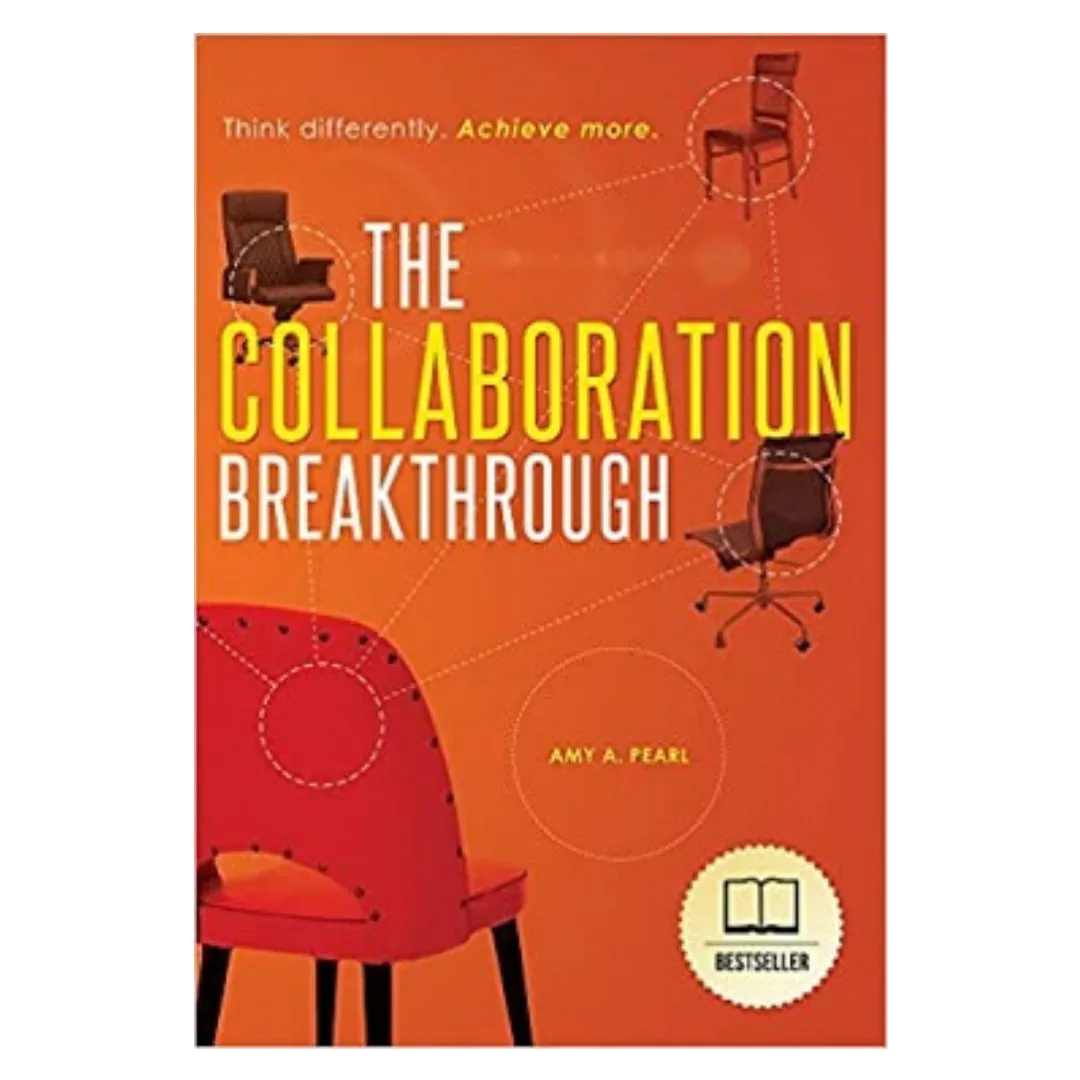
Collaboration
Breakthrough
Create a workplace you love with our best-selling book, employee survey, and interactive team experience.

Coaching
Conversations
Replace your archaic review process
with an online system to
guide GREAT conversations.
Download the Best Interview Questions
for Virtual Job Candidates
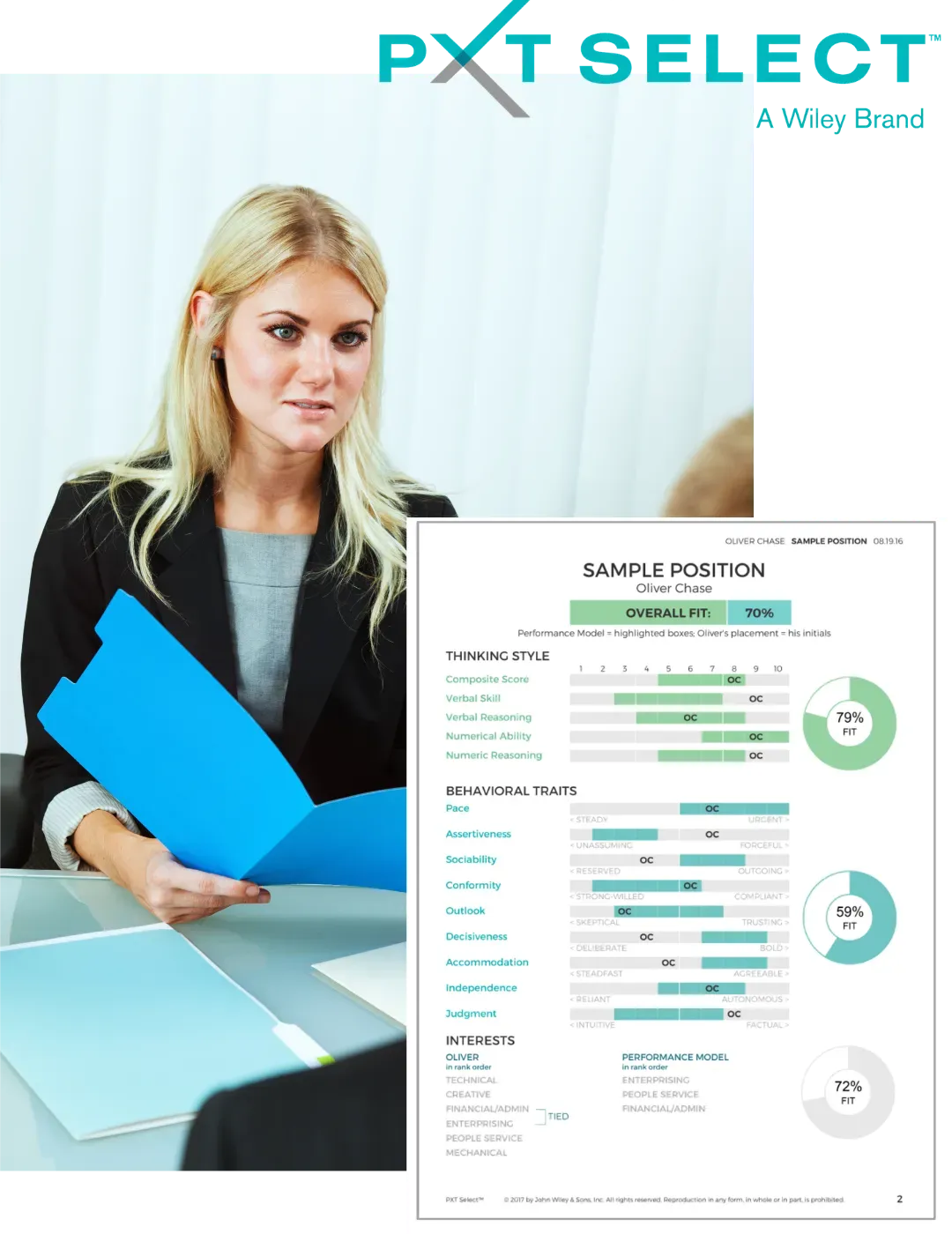
PXT Select
Reduce hiring mistakes by finding the right candidates faster with the most comprehensive candidate screening assessment on the market today. PXT Select measures thinking skills, behavioral traits, and motivational interests in one 45-minute assessment.
Perfect for HR professionals who need to:
Screen candidates faster and reduce time-to-hire with data-driven decisions
Get recommended interview questions based on candidates' fit
Give managers coaching tips to manager so new hires start strong
Identify succession candidates and support career pathways
Improve retention by hiring for cultural fit
15 free supplemental reports support job profiling, onboarding, coaching, leadership development, teambuilding, succession planning, and more.
EEOC Compliant |Valid & Reliable |30+ Years of Research
Behavioral Assessments for Leaders and Teams
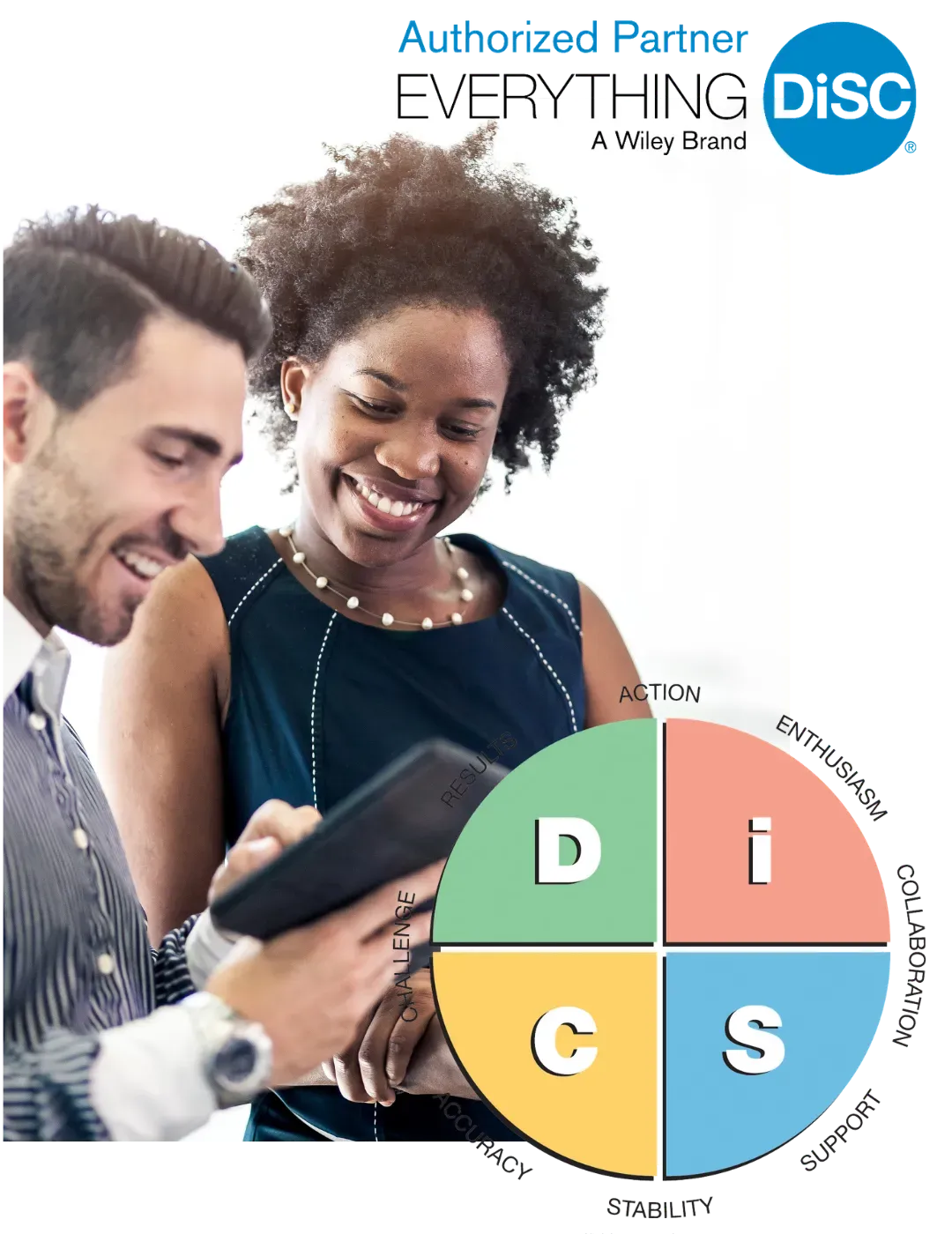
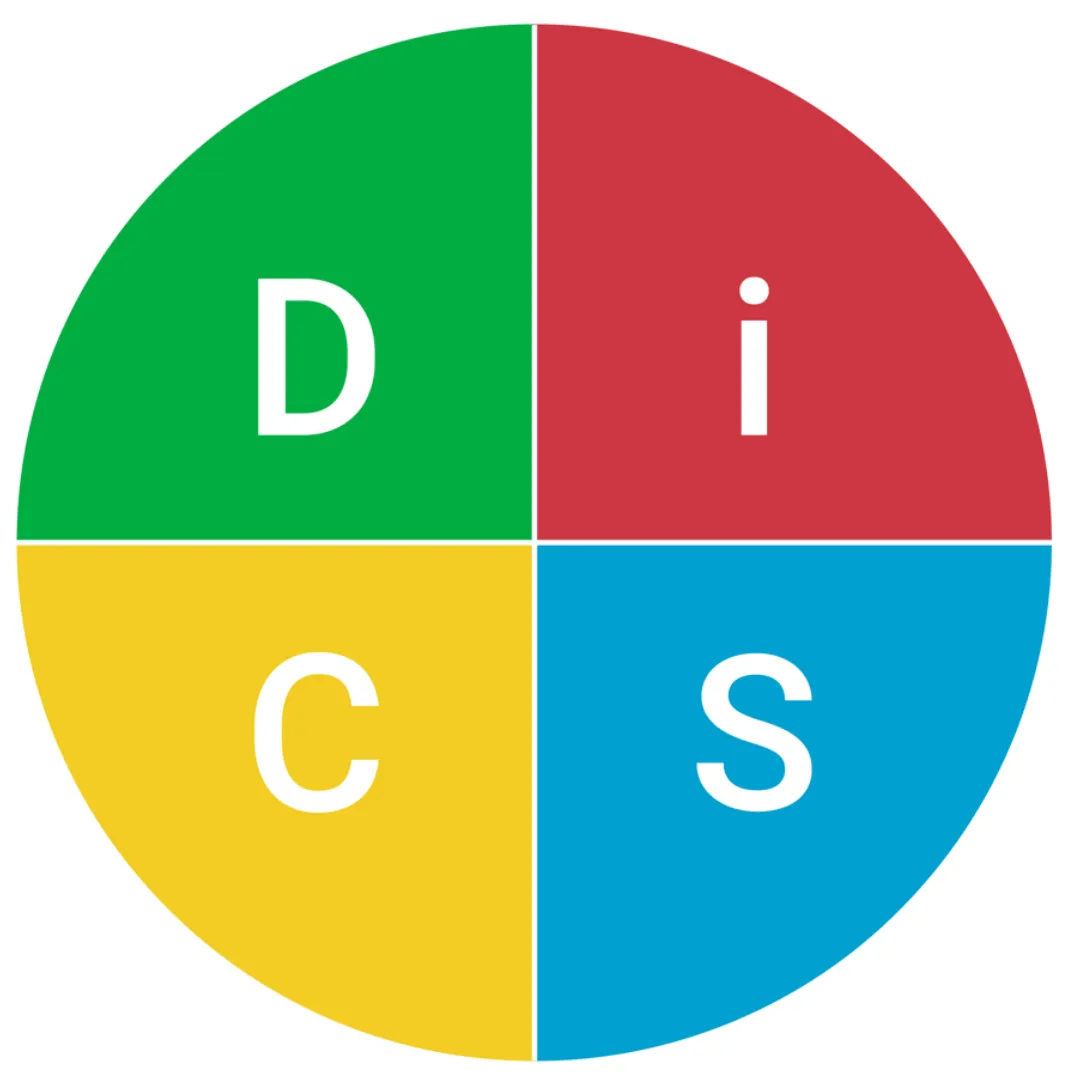
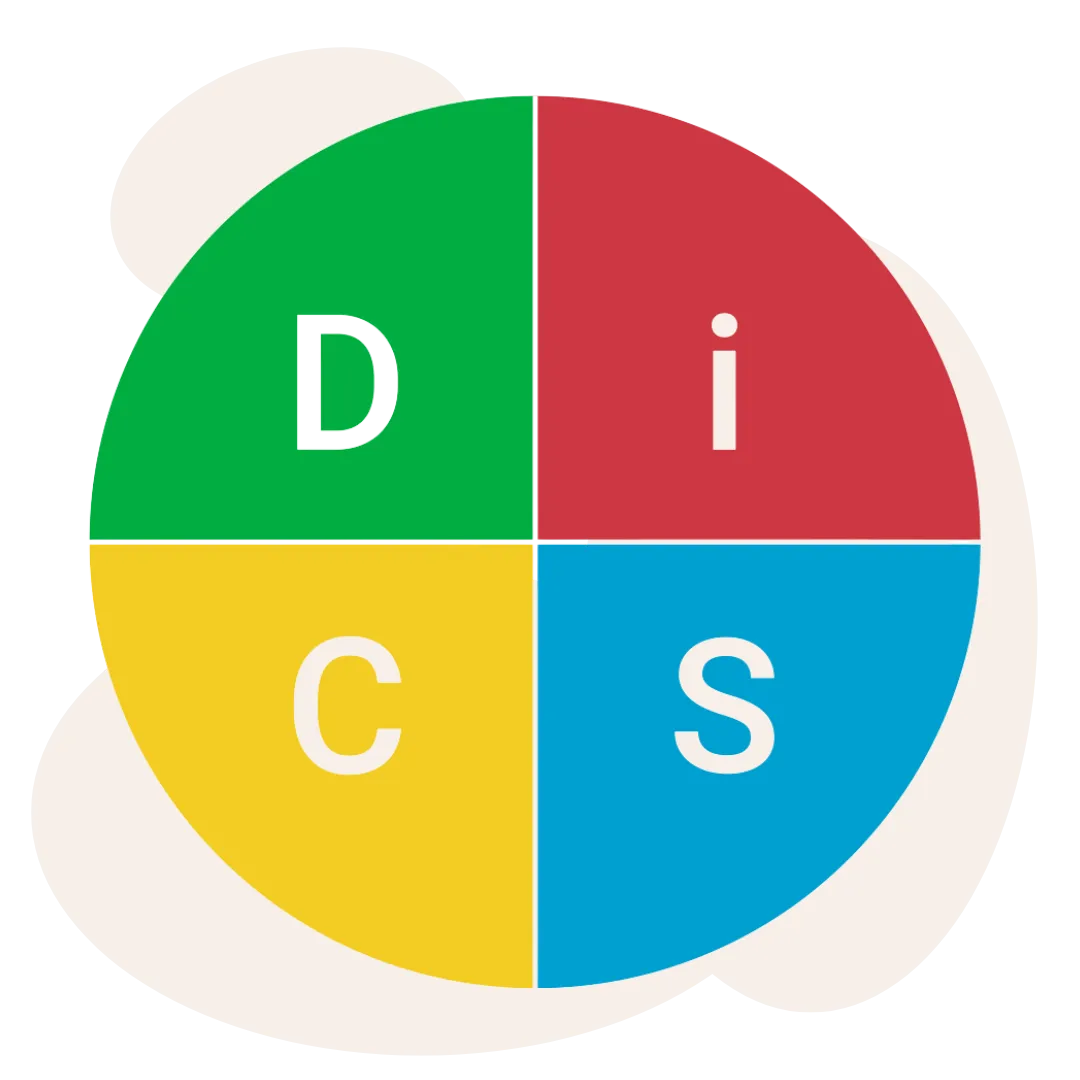
Everything DiSC
Build better communication, stronger teams, and effective leaders with Everything DiSC, the world's leading behavioral assessment used by 10+ million learners in 150,000+ organizations.
Ideal for Learning and Development professionals who need to:
Improve team communication and reduce conflict
Develop leaders at all levels
Facilitate dynamic teambuilding workshops that strengthen relationships and team effectiveness
Coach individuals to build agility and emotional intelligence
Expand their toolkit of customizable facilitator resources
Create a common language for workplace interactions
Plus, the Catalyst Platform gives learners ongoing access to dozens of micro-learning modules, the ability to create comparison and group reports with their colleagues, and to get personalized tips for effectiveness.
90% accuracy rating from learners | 40+ years of research |
Mobile-friendly for remote teams
Get Objective and Thoughtful Feedback
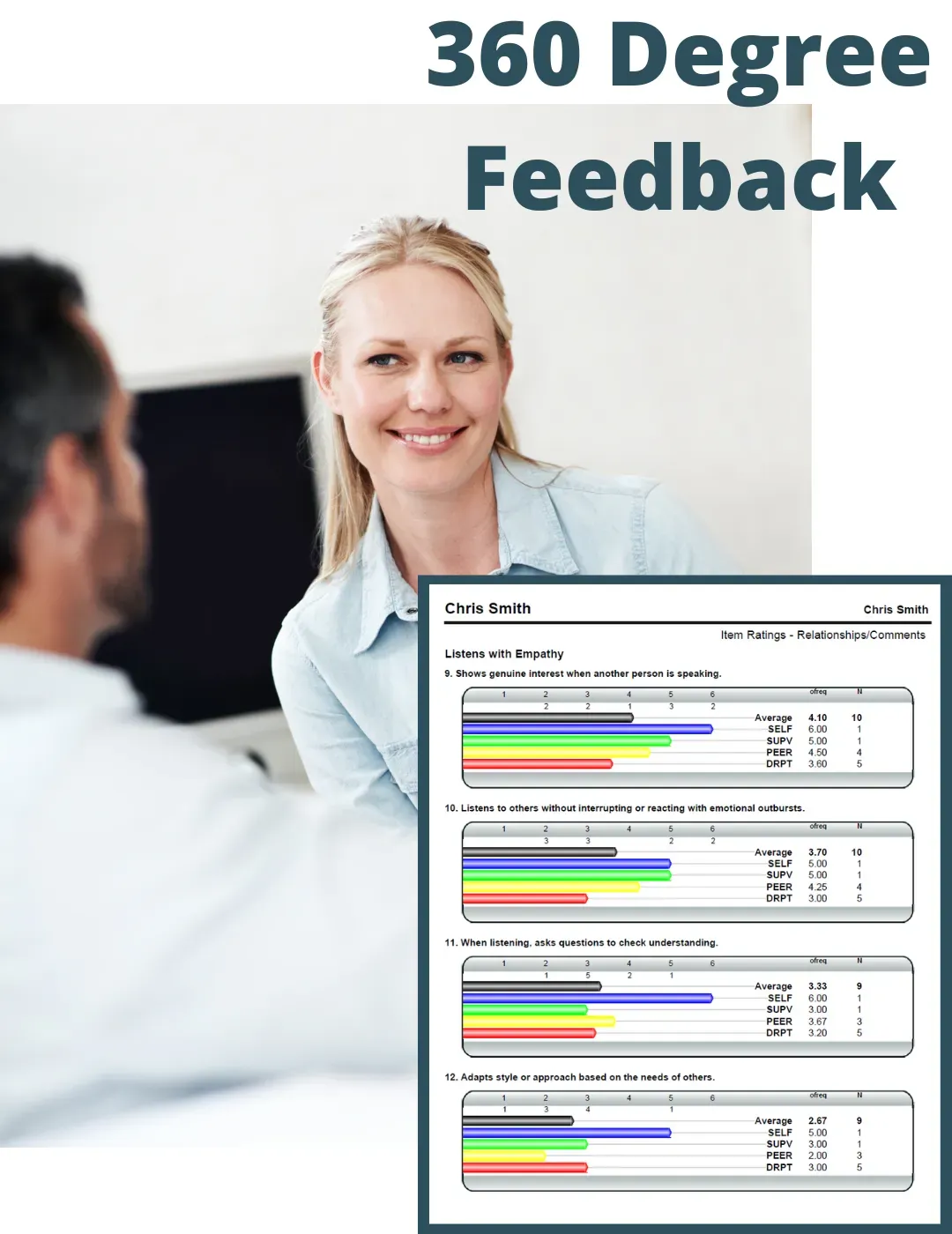
Customizable 360's
Accelerate leadership development with comprehensive feedback from managers, peers, direct reports, and others. Our customizable 360 degree feedback assessment is branded for your organization and provide actionable insights for leadership growth.
Perfect for learning and coaching professionals who need to:
Develop high potential employees
Build leaders' self-awareness of their strengths and blindspots
Add a new twist to performance review processes
Populate nine-block or other people planning templates
Measure leadership competency development over time
Your 360 will be designed to reflect your values, leadership competencies, and cultural norms. Plus, we'll develop an actionable Learn and Grow Guide to give participants' recommendations and progress tracking tools to build accountability for change.
Fully Customizable | One-on-One Debrief Services Available
Build High Performing and Collaboratie Teams
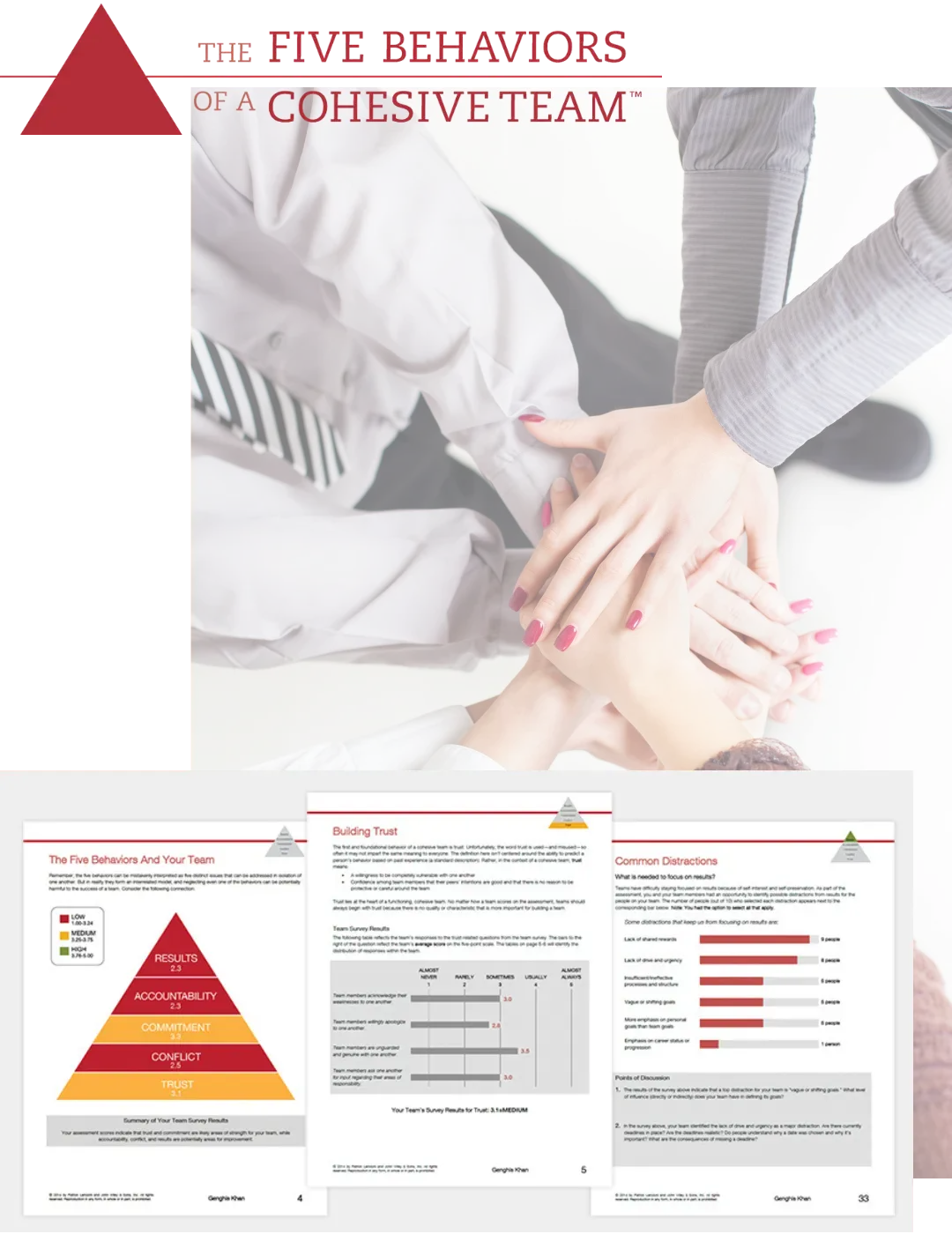
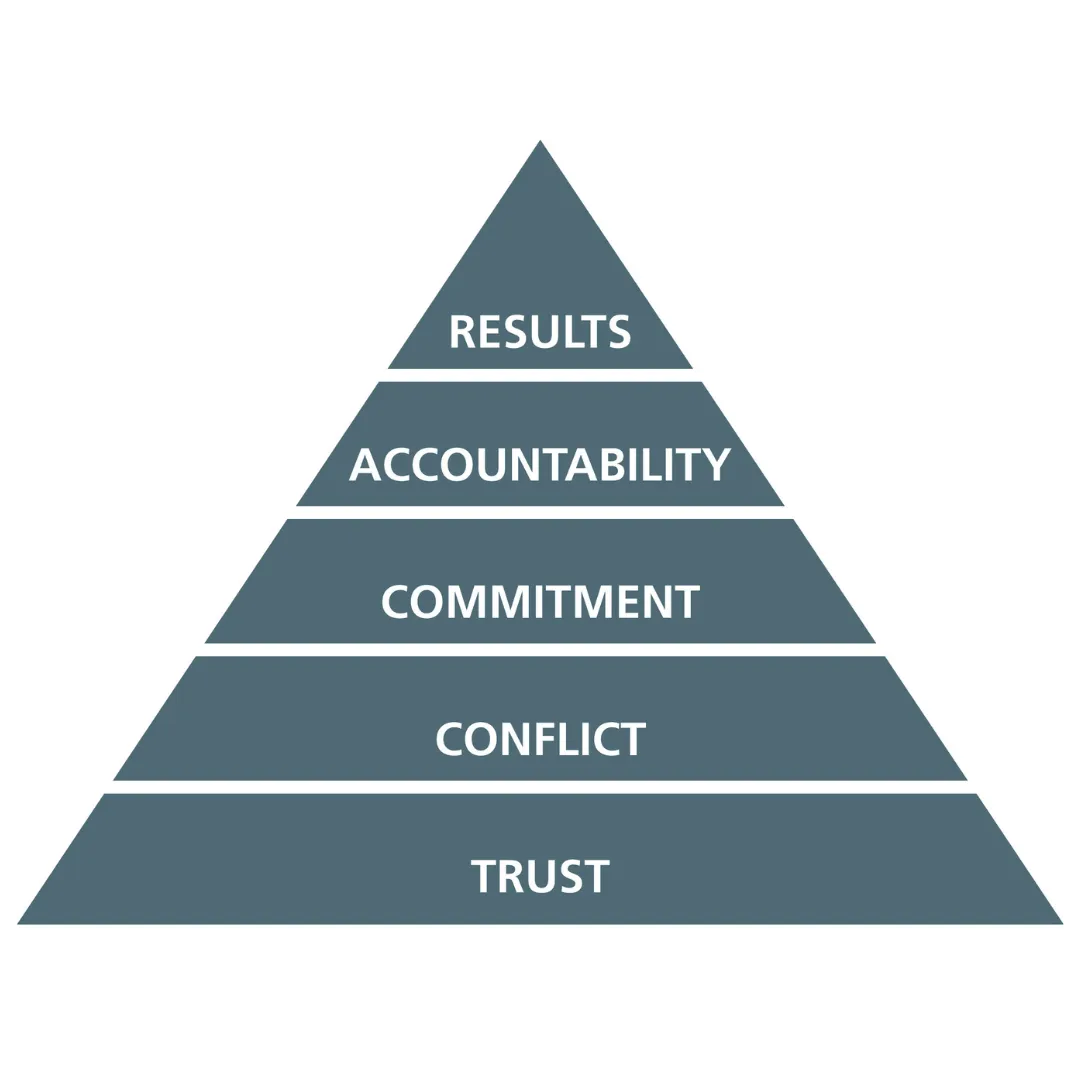
The Five Behaviors
Transform your team with Patrick Lencioni's proven framework for building trust, healthy conflict, commitment, peer-to-peer accountability, and a spirit of shared results. Based on the best selling book, The Five Dysfunctions of a Team.
Perfect for facilitators who need to:
Diagnose team dysfunction in a non-threatening way
Facilitate thought-provoking team building experiences with leader at all levels or functional teams
Improve collaboration among project teams
Build trust in newly formed or cross-functional teams
The optional integration of Everything DiSC allows team members to understand how their styles contribute to or hinder teamwork. Plus, an annotated facilitator's report gives you a page-by-page script of how to lead the team to success.
Looking for Do-It-Yourself Solutions?
Build the capacity, credibility, and confidence of your learning and development team by getting certified. We give you the training and tools you need to make the impact you desire at a cost you can afford.

Be inspired.
Take a deep dive into the research and profiles while joining a network of assessment lovers like you.
Expand your toolkit.
Get full facilitator kits with scripts, customizable PowerPoints, videos and online dashboards.

Build your expertise.
Earn continuing education credentia, while boosting your credibility and
your confidence.

Serve your team.
Make an impact on your organization. In fact, you could be the reason that people love their jobs again.
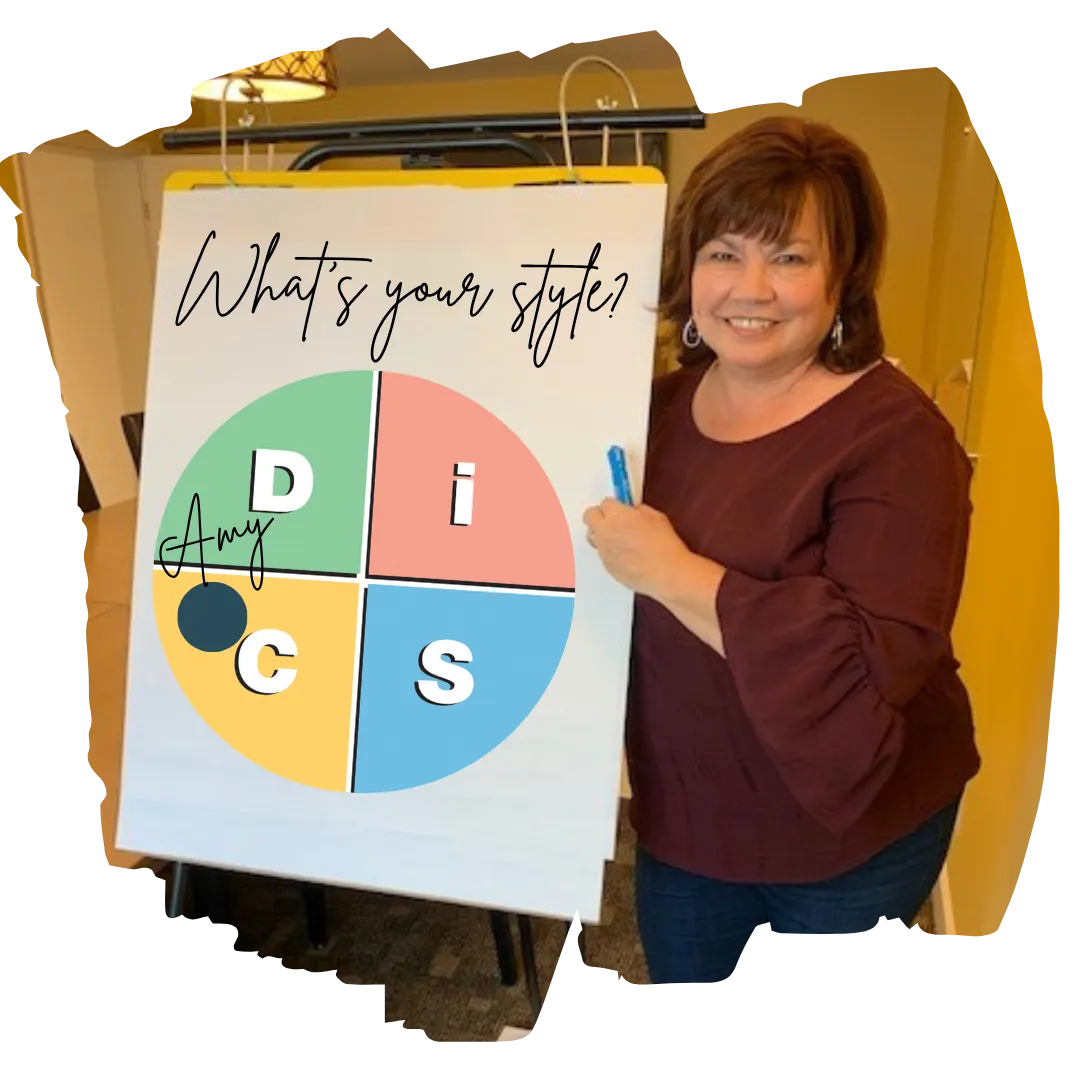
Hi there! I'm Amy Pearl.

I'm so glad that you're exploring our assessment solutions. For three decades, I've used assessments in just about every imaginable application: candidate screening, leadership development, team building, training, succession planning, organizational analytics...the list goes on.
But, what I love best is working with Human Resources and L&D professionals who want to build their knowledge, toolkit, and confidence in using assessments. So, let's hop on a call to talk about your needs. No pushy sales conversations and no BS. 😉
You can see that in DiSC in am Conscientious and Dominant. So, we'll talk about your goals, weigh the pros and cons of various options, identify the best assessment for you.
I welcome the opportunity to help you thrive!
Look who's using our assessments today:



How to Get Results with Assessments:

Choose an assessment that's backed by science and research, but incredibly easy to implement.

Use the results throughout the employee experience, from candidate screening to learning to team development to career growth.

Drive performance, retention, engagement, change, and more outcomes by transforming your culture.
And don't worry. We are here to support you every step of the way!
Check out our recent news and blog.
6 Red Flags to Look for When Screening Job Candidates
Quick Answer:
Some red flags have been around for a long time, while others have emerged as a result of societal trends and our virtual world of work. A couple of these red flags are things any hiring manager can spot while others require better tools than eyes alone. I'll suggest some flag testing interview questions below.
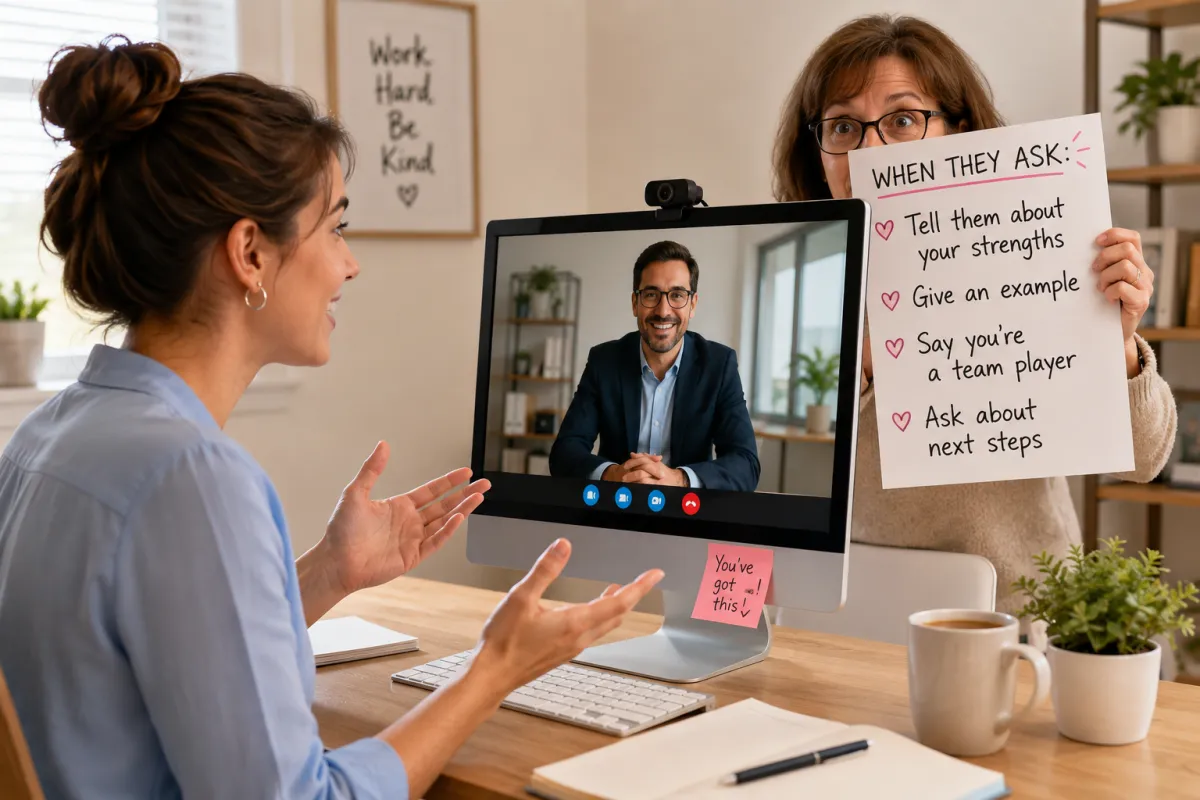
My son interviewed for his first real job during the height of the Pandemic. So, of course, his interviews were virtual. If you work in HR and you're a mom like me, you likely give your kids lots of unsolicited advice about how to succeed in the world of work. I recommended two things. I said, "Michael, write answers to 15 common interview questions on index cards and lay them out on your desk where they won't show on camera. That way, you don't have to be nervous about remembering the important details. Second, wear a suit and tie even though it's a virtual meeting."
After the interview he called with an update. I asked, "how did it go?" He enthusiastically replied, "my answers were fantastic." Then, with the sarcastic tone he shares with his mother he added, "they were all wearing t-shirts and shorts." Never-the-less, he got the job.
Not every candidate has such a helpful (and slightly overbearing) mother. I'm sure we've all seen some real doozies. This post shares six red flags that might not cause you to slam the door shut on a candidate, but are likely reasons to slow down and ask one more good question before you decide.
1. The AI-Generated Everything
According to a 2024 survey of 625 hiring managers by Resume Genius, an AI-generated resume is now the single biggest red flag hiring managers notice, even ahead of typos or poor formatting. It’s not that using AI tools is inherently disqualifying. Plenty of strong candidates use AI to polish grammar or tighten phrasing, and that’s fine. The problem shows up when a resume is so generically created and polished it could belong to anyone, every bullet point a slight variation on “results-driven team player,” with nothing specific or verifiable underneath. That tells you nothing real about the person in front of you, and it often means the interview is your only chance to find out if there’s an actual person behind the perfect bullet points.
Red Flag Testing Questions: Walk me through the approach you took to write your resume? How much of it was written by an AI tool? Their answer will tell you if they are current in their technical skills yet savvy enough to let you know that they used their own thoughts and experiences to make their resume their own.
2. The Serial Job-Hopper With No Real Explanation
That same Resume Genius survey found that 50% of hiring managers get hesitant about candidates showing a pattern of frequent job changes. The key word is pattern, especially if unexplained. Someone who left one role after eight months because of a layoff or a relocation isn’t a red flag. Someone who’s held six jobs in four years with a vague reason for each one is worth a closer look, not an automatic rejection, but definitely a closer look. Whenever I see someone who loves change in a candidate screening assessment, I always tell the recruiter or hiring manager to see how often they've changed jobs in the past.
Red Flag Testing Questions: Why did you leave your last 3 jobs? How soon do you think you'll be looking for new challenges if you start working here? What you’re really listening for is whether their explanations add up to a coherent story or whether each one sounds reasonable. Then, think about the kinds of opportunities you'll be able to offer the employee in the next 18-24 months to ensure you're fueling their desire for change.
3. The Candidate Who Brought Backup
I might be an overbearing mother, but I've never sat in on my kids' business meetings! (Note: I know some parents who have and remote interviewing has honestly made it easier to get away with.) Whether it’s a parent sitting just out of frame during a video interview, a friend “helping with tech issues,” or a candidate who visibly checks their phone for guidance mid-question, it’s a signal worth noting, especially for roles that require independent judgment under pressure.
Red Flag Testing Questions: What was the toughest problem you've solved at work? How did you discover the problem? How did you solve it? Who helped you? You're trying to determine if they have the knowledge and more importantly, the confidence to act on their own.
4. They Should Have Said Yes to the Dress
Dress codes vary widely by role and industry, so I’m not suggesting a candidate needs to wear a suit to interview for a construction job. I also have my share of dress pants with a stretchy waist that feel like yoga pants. I am suggesting people should think about looking their best for this important meeting rather than arriving in gym shorts and a sports bra or an outfit better suited to a rooftop bar. It’s rarely about the outfit itself. It’s about what the choice tells you regarding how seriously someone is taking the process, and how much thought they’ve put into representing themselves for a role where they’ll be representing your company to clients, vendors, or a team every single day.
Red Flag Testing Questions: Why did you choose the outfit you're wearing today for this interview? What does that outfit say about your personality and work ethic? Did they put thought into what they are wearing? Are they over-dressed because they wanted to put their best foot forward? Are they under-dressed because they didn't think about their look as a reflection of their work?
5. Answers That Are a Little Too Perfect (Also Known as Distortion)
Candidates want to sound like they are qualified for the job. Sometimes, they just go a little too far. They present socially desirable answers instead of raw truth. They overstate their accomplishments or past roles to look more qualified. They might even be genuinely mistaken or over-confident about their actual abilities. You need to put some extra muscle in and dig for specific, experience-based examples rather than accepting smooth generalities at face value. If every answer sounds like it came from a leadership book or an AI-generated list of answers to common interview questions rather than an actual memory, that's worth noting.
Red Flag Testing Questions: Tell me more about that experience? How were you involved? What two or three specific steps did you take to achieve that result? What went wrong and how did you fix it? If they can back up their claims with specific examples, challenges, and alternatives, you know you have a winner!
6. Started Strong But Faded Fast
This one is often the most costly because it’s invisible until months in. A candidate can produce the perfect resume and interview beautifully, even seem to sail through the probationary period. But then, things get real. Their onboarding coach is on to another new hire and their manager is now busy with other things. They have to work independently, think on their own, navigate work relationships, and achieve results, but they seem to struggle in one or more areas. Nobody catches this in an interview because the mismatch usually only shows up once the honeymoon period ends and the real complexity of the job kicks in. This is where an assessment like PXT Select can surface this potential red flag before you make an expensive promotion or hiring mistake, not after everyone’s already frustrated and a termination notice is on the way.
Red Flag Testing Questions: No questions necessary. Look at your candidate's PXT Select Comprehensive Selection Report. Are they a good fit for the job? Can you use the recommended interview/reference check questions to see if those potential red flags surfaced in their previous jobs? Assessments go underneath the surface and reveal the candidate's potential for long-term success with your organization.
Quick Answers to What People Actually Ask Me
Is any single one of these an automatic disqualifier? Almost never on its own. Red flags are meant to prompt a closer look, not an instant no. Context matters enormously.
How do I address something like job-hopping without sounding accusatory or making them feel at risk of not getting the job? Ask directly and neutrally: “I noticed a few shorter stints on your resume, walk me through what was happening in each of those roles.” Most honest candidates will answer this comfortably.
What’s the biggest red flag hiring managers miss entirely? Fit for complexity. Everyone watches for obvious behavioral or honesty issues, but almost nobody is checking whether a candidate’s actual thinking style matches what the role will demand a year from now, not just today. PXT Select measures this.
Should I ever hire someone despite a red flag? Often, yes. A red flag is a prompt to ask better questions, not a verdict. Some of the best hires I’ve seen had one or two flags that turned out to have completely reasonable explanations once someone actually asked. The PXT Select Coaching Report gives managers tips for coaching their new hire right from day one. It's an easy way to get ideas for helping a new hire overcome gaps where they weren't a perfect match.
Are red flags different for entry-level roles versus senior hires? Somewhat. Job-hopping and inexperience with interviews get more leeway at entry level. Characteristics such as critical thinking skills and emotional intelligence matter just as much, if not more, the higher up the role sits. Plus, the cost of a mismatch grows with the responsibility attached to it.
Where to Go From Here
It's so tempting to overlook these red flags in an interview. You're eager to fill an open role and the candidate genuinely seems like a nice person. I get it. That's why I recommend you use an assessment as part of a candidate screening process. A small investment up front can prevent a big headache down the road. If you're not familiar with the process, check out some of my other blog posts: What Do Pre-Employment Assessments Actually Measure? and 8 Benefits of Using Pre-Employment Testing are great places to start. Or, just give me a call at 716-276-8005. I can help you assess your first candidate today!
P.S. Trust your instincts on the wardrobe and the mom on the video call. For the flags that are a little less obvious, you need better tools than instinct alone.
Stay Ignited!